- M-floor, Al Makhawi Building. Umm Hurair Road, Oud Metha, Dubai – UAE
- advisor@noblehouseconsultants.com
- +971508759073 +971508758925


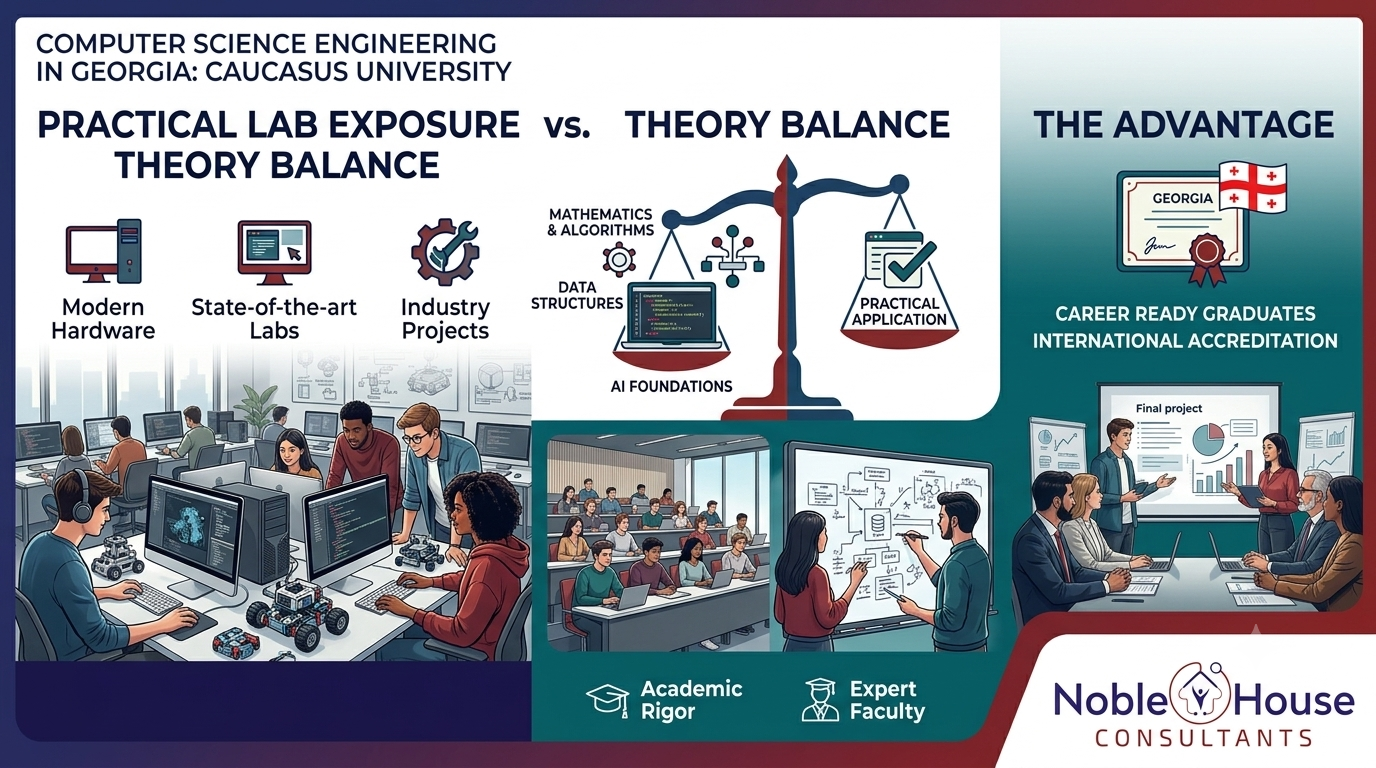
Computer Science Engineering in Georgia: Practical Lab Exposure vs Theory Balance at Caucasus University
The quality of a Computer Science Engineering degree is often determined by how effectively it balances theoretical knowledge with practical application. As technology continues to reshape industries worldwide, universities must prepare students not only to understand computing concepts but also to apply them in real-world environments. For students exploring computer science engineering in Georgia, finding a program that combines academic rigor with hands-on experience can play a crucial role in long-term career development.
The Growing Importance of Balanced Computer Science Education
Modern technology careers demand more than coding skills alone. Software engineers, system architects, cybersecurity professionals, and data analysts are expected to possess strong analytical thinking, problem-solving abilities, and practical technical expertise. Universities that focus exclusively on theory may leave students with limited industry readiness, while programs that emphasize only practical skills can lack the academic depth necessary for long-term growth.
A successful Computer Science Engineering program therefore requires a structured blend of both approaches. Students need to understand the principles behind computing systems while simultaneously gaining experience implementing solutions through projects, assignments, and laboratory work.
Why Theoretical Foundations Remain Essential
Theoretical knowledge serves as the backbone of computer science. Core subjects such as algorithms, data structures, discrete mathematics, computer architecture, and operating systems help students understand how modern technologies function at a fundamental level.
These concepts are not tied to any specific programming language or technology trend. Instead, they provide transferable knowledge that remains relevant regardless of how the technology landscape evolves. Graduates with strong theoretical foundations often find it easier to adapt to emerging tools and innovations because they understand the logic that drives technological systems.
For students considering computer science engineering in Georgia, academic depth remains a significant factor when evaluating the quality of a university curriculum. A strong theoretical framework enables graduates to move beyond routine programming tasks and approach complex technical challenges with confidence.
The Role of Practical Laboratory Exposure
While theory develops understanding, practical exposure develops competence. Employers increasingly seek graduates who can contribute effectively from the beginning of their professional careers. Hands-on learning experiences help bridge the gap between classroom concepts and workplace expectations.
Laboratory sessions provide opportunities for students to experiment, test ideas, troubleshoot systems, and develop technical solutions. Through practical assignments, students gain valuable experience in software development, system analysis, data management, and problem-solving.
These activities also cultivate essential workplace skills such as teamwork, communication, project planning, and critical thinking. By applying classroom knowledge to practical scenarios, students develop a deeper understanding of how technology functions in real-world environments.
How Caucasus University Maintains the Balance
One of the distinguishing aspects of Caucasus University is its emphasis on balancing academic knowledge with practical implementation. Rather than treating theory and application as separate learning experiences, the curriculum integrates them throughout the educational journey.
Students spend significant time mastering foundational computing concepts while also participating in laboratory activities, technical assignments, presentations, and project-based assessments. This integrated approach helps ensure that learning remains both intellectually rigorous and professionally relevant.
For those who wish to study engineering at Caucasus University, this balance offers an educational environment where conceptual understanding and practical capability are developed simultaneously. Students learn not only how technologies work but also how to apply them effectively in professional contexts.
Project-Based Learning as a Career Preparation Tool
Project-based learning has become one of the most effective educational methodologies in engineering disciplines. Unlike traditional examination-focused models, project work requires students to demonstrate both knowledge and execution.
Students may be tasked with designing software solutions, developing prototypes, analyzing datasets, or presenting technical findings. Such experiences encourage independent thinking and strengthen decision-making abilities.
In many respects, project-based assessments mirror the challenges graduates will encounter in professional environments. They require planning, collaboration, technical implementation, testing, and presentation skills. These experiences contribute significantly to career readiness.
As the demand for technology professionals continues to grow globally, institutions offering computer science engineering in Georgia increasingly recognize the importance of practical project experience as part of a comprehensive educational model.
Developing Skills for Emerging Technologies
The technology industry continues to evolve through advancements in artificial intelligence, cybersecurity, cloud computing, software engineering, and data science. Preparing students for this dynamic environment requires more than teaching current tools and technologies.
Universities must equip students with adaptable skills that remain valuable as industries change. Strong analytical abilities, computational thinking, problem-solving expertise, and technical communication skills are all essential components of long-term professional success.
Programs that effectively combine theory and practical training help students build these competencies while maintaining the flexibility required to adapt to future technological developments. This approach enables graduates to remain competitive throughout their careers.
For many prospective students researching computer science engineering in Georgia, the ability of a university to support both technical proficiency and lifelong learning has become a key consideration.
The Student Experience Beyond the Classroom
A comprehensive engineering education extends beyond lectures and examinations. Collaborative learning environments, practical workshops, technical events, laboratory experiences, and research-oriented activities contribute significantly to student development.
These opportunities encourage students to apply knowledge in diverse contexts while developing professional confidence. Exposure to practical challenges also helps students gain a clearer understanding of potential career paths within the technology sector.
By participating in a variety of academic and practical experiences, students can build a well-rounded skill set that supports both immediate employability and long-term career progression.
Turn Your Tech Dreams into Reality with Expert Guidance
At Noble House Consultants, we help aspiring students take confident steps toward quality international education opportunities. If you’re looking for a Computer Science Engineering program that combines strong theoretical foundations with practical laboratory exposure and project-based learning, we can guide you throughout the journey. From understanding university options to navigating the admission process, our experienced team supports you at every stage. Let us help you find the right academic path and move closer to your future technology career goals.
Conclusion
The debate between theory and practice in engineering education is not about choosing one over the other. The most effective Computer Science Engineering programs recognize that both are essential for developing capable technology professionals. Strong theoretical foundations provide the intellectual framework needed to understand complex systems, while practical laboratory exposure transforms that knowledge into real-world capability.
For students evaluating computer science engineering in Georgia, Caucasus University presents an educational model that prioritizes both academic excellence and practical skill development. Through its balanced curriculum, project-based learning approach, and emphasis on hands-on experience, the university helps prepare graduates for the evolving demands of the global technology landscape.
Frequently Asked Questions
Q1. Why is balancing theory and practical learning important in Computer Science Engineering?
A balanced approach helps students understand core concepts while developing hands-on skills needed for real-world technology careers.
Q2. What theoretical subjects are commonly taught in Computer Science Engineering?
Key subjects include algorithms, data structures, operating systems, computer architecture, and discrete mathematics.
Q3. How does practical laboratory exposure benefit Computer Science students?
Lab sessions allow students to apply concepts, solve technical problems, and gain experience with real-world computing tasks.
Q4. What is project-based learning in Computer Science Engineering?
Project-based learning involves developing software, analyzing data, and solving practical challenges to strengthen technical and professional skills.
About Author

Post a Comment