- M-floor, Al Makhawi Building. Umm Hurair Road, Oud Metha, Dubai – UAE
- advisor@noblehouseconsultants.com
- +971508759073 +971508758925


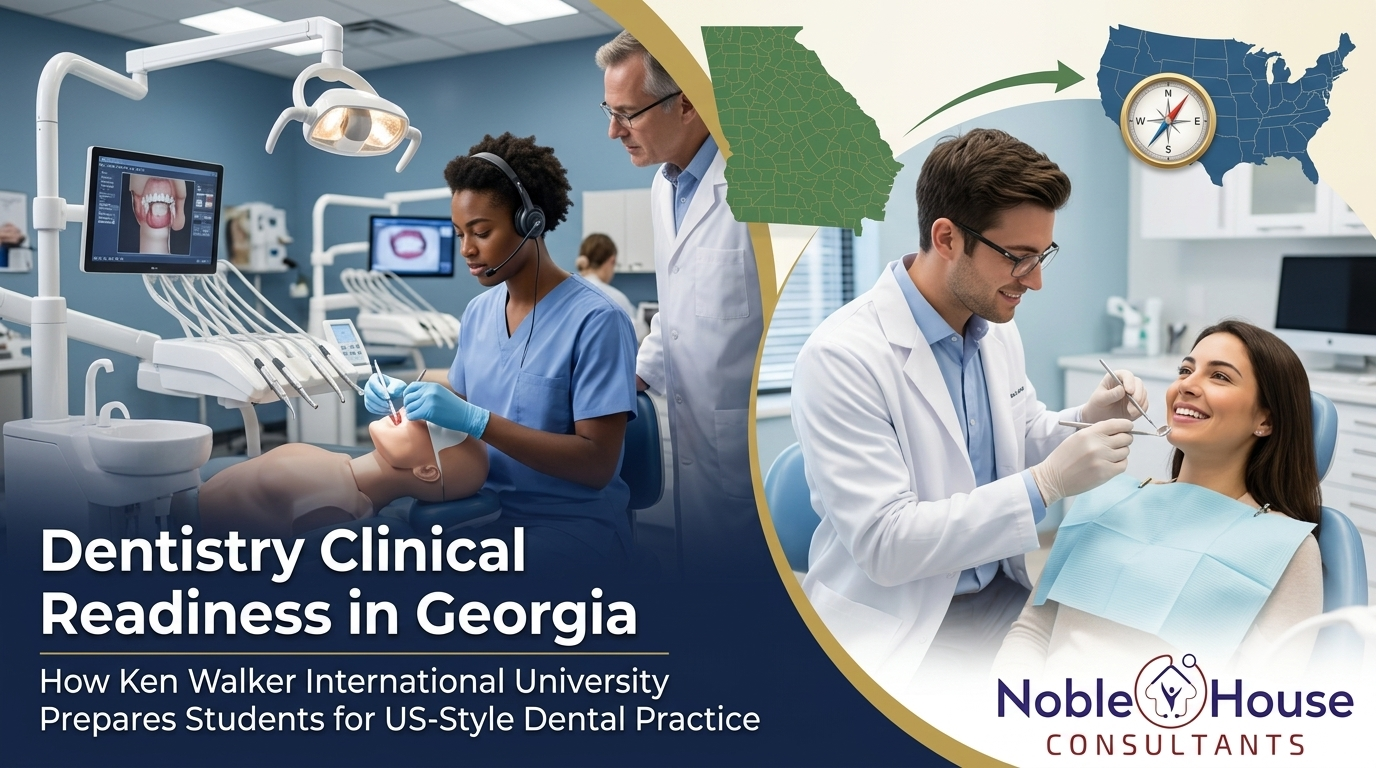
Dentistry Clinical Readiness in Georgia: How Ken Walker International University Prepares Students for US-Style Dental Practice
The journey to becoming a successful dentist requires more than academic knowledge. Students must develop strong clinical skills, patient communication abilities, diagnostic competence, and an understanding of modern dental practices. For international students seeking a globally relevant dental education, Georgia in Europe has emerged as an increasingly attractive destination. Many aspiring professionals choose to study dentistry in Georgia because of its internationally aligned curriculum, English-medium instruction, and growing emphasis on practical training.
Clinical readiness has become one of the most important indicators of a dental graduate’s future success. Employers, licensing bodies, and advanced educational institutions all seek graduates who can confidently transition from the classroom to patient care environments. Universities that incorporate early clinical exposure, competency-based assessments, and evidence-based learning provide students with a significant advantage in today’s competitive healthcare landscape.
Why Clinical Readiness Matters in Modern Dentistry
Dentistry is a profession that demands both theoretical expertise and practical competence. Understanding oral anatomy, pathology, and treatment planning is essential, but the ability to apply this knowledge in real-world situations is what ultimately defines a capable dental practitioner.
Clinical readiness involves multiple dimensions, including:
- Patient assessment and diagnosis
- Treatment planning
- Communication and professionalism
- Infection control protocols
- Clinical decision-making
- Hands-on procedural skills
- Ethical practice standards
Students who develop these competencies during their education are better prepared for professional practice and postgraduate opportunities.
The Growing Appeal of Dental Education in Georgia
Over the last decade, Dental Education in Georgia has gained recognition among international students due to its affordability, English-language programmes, and alignment with global educational standards. Universities in Georgia have invested significantly in modern teaching methods, simulation laboratories, and clinical training facilities.
The country’s location at the crossroads of Europe and Asia has also contributed to its appeal as a destination for students seeking internationally focused healthcare education. Graduates benefit from exposure to diverse patient populations while studying within a structured academic environment.
Many institutions now design their programmes with international mobility in mind, ensuring that students receive education that supports future licensure pathways and advanced study opportunities abroad.
A Curriculum Influenced by Western Educational Standards
One of the distinguishing characteristics of the programme is its strong foundation in Western medical and dental education principles. The curriculum places significant emphasis on evidence-based learning, integrating biomedical sciences with clinical applications from the early stages of the programme.
Students develop a comprehensive understanding of oral-systemic relationships, enabling them to appreciate how oral health influences overall patient wellbeing. This integrated approach reflects educational models commonly found in leading North American institutions.
Rather than relying solely on traditional lecture-based teaching, the programme encourages critical thinking, case-based discussions, and problem-solving exercises that help students develop professional judgment.
For many international applicants who wish to study dentistry, this approach provides valuable preparation for future examinations and professional practice environments.
Early Clinical Exposure Builds Confidence
One of the most effective ways to prepare future dentists is through early and consistent clinical exposure. Instead of postponing patient interaction until the final years of study, students begin developing practical skills through simulation laboratories and structured clinical experiences.
Simulation training allows students to practise procedures in a controlled environment before treating patients. These experiences help build confidence, improve hand skills, and reinforce theoretical knowledge.
As students progress through the programme, they gain increased exposure to patient care activities under faculty supervision. This gradual transition ensures that clinical competence develops systematically over time.
By combining classroom learning with practical application, students are able to better understand how dental concepts translate into real-world patient treatment.
Competency-Based Assessment Through OSCEs
Modern healthcare education increasingly relies on competency-based assessment methods. One of the most recognised approaches is the Objective Structured Clinical Examination (OSCE).
OSCEs evaluate a student’s ability to perform clinical tasks, communicate effectively, and demonstrate professional judgment in simulated healthcare scenarios. Rather than focusing solely on memorisation, these examinations assess practical skills that are directly relevant to patient care.
Students rotate through multiple stations where they may be required to:
- Conduct patient interviews
- Interpret clinical findings
- Explain treatment options
- Demonstrate procedural techniques
- Apply ethical decision-making principles
These assessments closely mirror evaluation methods used by many international healthcare institutions and licensing authorities.
For students who plan to study dentistry with long-term international career goals, familiarity with competency-based assessments can be particularly beneficial.
English-Medium Education with Practical Communication Training
Effective communication is an essential component of successful dental practice. Dentists must gather patient histories, explain treatment plans, obtain informed consent, and build trust with patients from diverse backgrounds.
The programme delivers lectures, coursework, and examinations in English, ensuring accessibility for international students. At the same time, students receive training in basic Georgian language skills during the early years of study.
This bilingual approach enables students to communicate effectively during clinical rotations while gaining valuable experience interacting with real patients. Such exposure strengthens communication skills and helps students become more adaptable healthcare professionals.
The ability to engage confidently with patients is often as important as technical competence when delivering high-quality dental care.
Preparation for International Licensing Pathways
Many international students pursue dental education with the goal of expanding their future career opportunities. Graduates interested in practising in the United States typically follow a structured pathway that includes licensing examinations and additional educational requirements.
The curriculum supports preparation for internationally recognised examinations through comprehensive foundational science education and clinically relevant coursework. Students develop the knowledge base required for examinations that assess biomedical sciences, patient management, diagnosis, and treatment planning.
The institution’s emphasis on US-Style Dental Practice Training further enhances students’ understanding of clinical standards commonly associated with North American dentistry.
Graduates who successfully complete licensing requirements may pursue advanced standing opportunities and further educational pathways depending on the regulations of their chosen destination.
For students seeking an internationally relevant education, the opportunity to study dentistry within a globally aligned framework can provide valuable long-term benefits.
Affordable Education with Long-Term Value
Cost remains an important consideration for many international students. Compared with dental programmes in several Western countries, studying in Georgia can offer a more affordable pathway to obtaining a professional dental degree.
Students benefit from:
- English-language instruction
- Modern facilities
- Clinical training opportunities
- Internationally oriented curriculum
- Lower overall educational expenses
This combination allows aspiring dentists to pursue professional education while managing costs more effectively than in many traditional study destinations.
The five-year Doctor of Dental Medicine programme structure also enables students to develop both academic and clinical competencies within a comprehensive educational framework.
Developing Future-Ready Dental Professionals
Healthcare continues to evolve rapidly, requiring dental professionals to adapt to new technologies, treatment approaches, and patient expectations. Educational institutions that prioritise critical thinking, evidence-based practice, and clinical competence are better positioned to prepare graduates for these challenges.
Students benefit from learning environments that encourage lifelong learning, professional responsibility, and continuous improvement. These qualities are increasingly valued by employers, licensing authorities, and postgraduate training programmes worldwide.
By focusing on practical experience alongside scientific knowledge, graduates enter the profession with stronger confidence and readiness for clinical practice.
Turn Your Dental Career Aspirations into a Global Success Story
Noble House Consultants helps aspiring students take confident steps towards an international education by providing personalised guidance for admissions, course selection, and overseas study planning. Whether you are exploring opportunities in dentistry, medicine, engineering, management, or other professional fields, we work closely with you to identify the right academic pathway based on your goals and budget. Our experienced team supports you throughout the journey, from application preparation and university selection to documentation and visa assistance. With a strong commitment to affordable study options and student-focused support, we aim to make the process smoother and less overwhelming.
Our network, industry knowledge, and ongoing assistance help students adapt to life abroad and focus on building a successful future. When you choose us, you gain a dedicated partner committed to helping you achieve your academic ambitions with confidence.
Conclusion
Clinical readiness has become a defining factor in modern dental education. Through a curriculum influenced by Western educational principles, early clinical exposure, simulation-based learning, competency-focused assessments, and strong communication training, students receive comprehensive preparation for professional practice.
For international applicants seeking a globally relevant dental education, Georgia offers an appealing environment that combines affordability with academic quality. Those who choose to study dentistry in such a setting gain valuable opportunities to develop the knowledge, skills, and professional competencies required for success in an increasingly international healthcare landscape.
Frequently Asked Questions
Why is clinical readiness important for dental students?
Clinical readiness ensures students can apply theoretical knowledge in real patient-care settings. It helps develop diagnostic, communication, and procedural skills essential for professional dental practice.
What makes Georgia a popular destination for dental education?
Georgia offers English-medium programmes, internationally aligned curricula, modern training facilities, and comparatively affordable tuition fees for international students.
What is early clinical exposure in dentistry?
Early clinical exposure allows students to develop practical skills through simulation labs and supervised patient interactions before entering advanced clinical years.
What are OSCE assessments in dental education?
Objective Structured Clinical Examinations (OSCEs) are practical assessments that evaluate clinical competencies, patient communication, diagnostic reasoning, and professional decision-making skills.
Can international dental graduates pursue opportunities in the United States?
Yes. Many international dental graduates can pursue licensing pathways in the United States by meeting examination requirements and completing additional educational requirements where applicable.
Why is English-medium instruction beneficial for international students?
English-medium instruction helps students learn complex dental concepts more effectively and prepares them for international examinations, postgraduate education, and global career opportunities.
What skills do students develop during clinical dental training?
Students develop patient assessment, treatment planning, infection control, communication, ethical decision-making, and hands-on clinical skills necessary for modern dental practice.
About Author

Post a Comment