- M-floor, Al Makhawi Building. Umm Hurair Road, Oud Metha, Dubai – UAE
- advisor@noblehouseconsultants.com
- +971508759073 +971508758925


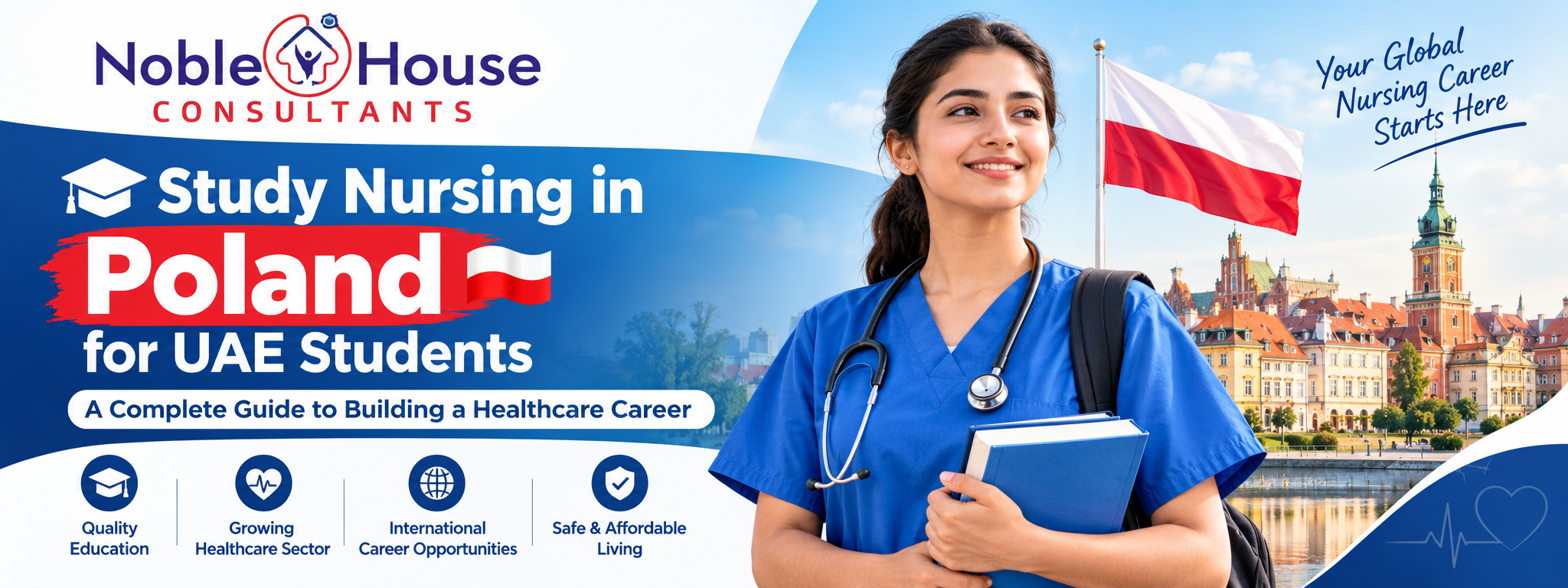
Study Nursing in Poland for UAE Students: A Complete Guide to Building a Healthcare Career
Choosing the right destination for nursing education is an important decision for students planning a career in healthcare. Poland has gained attention among international students because of its European education system, English-taught programs, comparatively affordable tuition fees, and practical clinical training. For UAE students, study nursing in Poland can provide an opportunity to experience a European academic environment while developing theoretical knowledge and practical skills relevant to the nursing profession.
Why Choose Poland for Nursing Education?
Poland is a member of the European Union and follows European higher education frameworks. Nursing programs combine academic study with practical and clinical education, helping students understand important areas such as anatomy, physiology, pharmacology, patient care, medical ethics, healthcare communication, and nursing procedures.
For students exploring nursing in Poland for UAE students, the availability of English-taught courses can be an important consideration. Students who have previously studied in English may find it easier to adapt to an English-medium academic environment. At the same time, students should understand that learning the local language can be useful, particularly during clinical placements where communication with patients and healthcare staff may be necessary.
Poland also offers a multicultural environment, with students from different parts of the world studying at its universities. This can provide international exposure and help students develop communication and interpersonal skills that are valuable in healthcare professions.
English-Taught Nursing Programs
Language plays a major role when selecting an overseas nursing program. English-taught nursing courses allow international students to complete their academic education without needing advanced Polish language skills at the beginning of their studies.
Students considering study nursing in Poland should nevertheless understand that an English-medium program does not necessarily mean Polish language skills will never be required. Nursing involves direct interaction with patients, and clinical environments may operate primarily in Polish. Learning basic Polish can therefore help students communicate more effectively during practical training and daily life.
Before applying, students should check whether a particular nursing program is completely taught in English or includes any subjects, clinical activities, or other requirements involving the Polish language.
Tuition Fees and Living Costs
Cost is another factor that makes Poland an option for students considering nursing education abroad. Tuition fees differ according to the university, program, and other academic factors. Some nursing programs may have tuition fees of approximately €3,000 per year, although students should always confirm current fees directly with their chosen institution.
Tuition is only one part of the overall cost. Students should also plan for accommodation, food, transportation, health insurance, study materials, communication expenses, and personal needs. Living expenses can differ significantly between Polish cities, with accommodation generally being one of the largest monthly costs.
Creating a detailed budget before travelling can help students understand the total financial commitment involved. It is also sensible to keep an additional amount available for unexpected expenses throughout the course.
Clinical and Practical Training
Nursing education requires more than classroom learning. Practical training allows students to apply their academic knowledge in healthcare environments and gradually develop professional skills under supervision.
Depending on the program, students may complete substantial clinical training, with some courses including more than 1,000 hours of practical education. Training can cover areas such as patient assessment, nursing procedures, medication-related responsibilities, infection prevention, patient safety, healthcare documentation, and communication.
When researching nursing in Poland, students should examine the clinical component of each program carefully. The number of practical hours, placement arrangements, healthcare facilities, supervision methods, and areas of clinical exposure can vary between institutions.
Clinical experience can also help students become familiar with teamwork within healthcare settings. Working alongside healthcare professionals can provide an understanding of how nurses contribute to patient care and coordinate with other members of a medical team.
Admission Requirements
Admission requirements vary between universities, so students should review the specific criteria for every program they consider. Generally, applicants need to have completed secondary education or an equivalent Year 12 qualification.
A strong academic background in science subjects such as biology and chemistry can be useful because nursing education includes considerable scientific content. Universities may assess academic transcripts and other educational documents as part of the admission process.
English proficiency may also be required for English-taught nursing programs. Depending on the institution, applicants may need to provide scores from recognized examinations such as IELTS or TOEFL. Some universities may have alternative methods for assessing English ability or may provide exemptions under specific conditions.
Students should prepare academic certificates, transcripts, identification documents, photographs, and any other required paperwork in accordance with the university’s instructions.
Application and Document Preparation
The application process normally starts with identifying suitable nursing programs and comparing their tuition fees, curriculum, duration, clinical training, admission criteria, and location.
Once a suitable program has been selected, applicants can prepare their documents and submit their application according to the university’s stated procedure. Some institutions may require online applications, while others may have additional document submission procedures.
Academic documents issued outside Poland may need to be legalized, apostilled, or translated, depending on the country where they were issued and the requirements of the institution or relevant authorities. Students should confirm these requirements before submitting documents to avoid unnecessary delays.
Those planning to study nursing in Poland should also pay close attention to application deadlines, document formats, tuition payment conditions, and enrollment procedures.
Student Visa and Pre-Departure Planning
Students from outside the European Union generally need to complete the appropriate immigration process before travelling to Poland for long-term studies. A Polish National Visa, commonly known as a Type D visa, may be applicable to students undertaking longer academic programs, depending on their individual circumstances and current regulations.
Applicants may need documents such as a university admission letter, evidence of sufficient financial resources, accommodation information, insurance, and other supporting documents. Visa requirements can change, so applicants should always verify the latest requirements through official Polish government or consular sources.
Pre-departure preparation should also include arranging accommodation, planning transportation from the airport, preparing a realistic monthly budget, organizing important documents, and becoming familiar with the city where the student will live.
Studying Nursing as an International Student
Poland’s combination of English-medium education, European academic standards, practical training, and relatively moderate tuition costs makes it an option worth researching for students from different countries. Students interested in study nursing in Poland for international students should consider their complete academic and professional pathway rather than focusing only on tuition fees.
It is important to research whether the selected qualification will meet the professional requirements of the country where the student eventually wants to work. Nursing is a regulated profession, and graduates may need to complete registration, licensing, examinations, language requirements, or qualification recognition procedures depending on their intended destination.
Career Opportunities After Graduation
A nursing qualification can provide a foundation for careers in hospitals, clinics, community healthcare, rehabilitation services, elderly care, and other healthcare settings. However, completing a nursing degree does not automatically provide professional registration in every country.
UAE students planning to return home after graduation should research the applicable nursing licensing and qualification recognition requirements in the UAE. These requirements may include academic qualification verification, clinical experience, examinations, documentation, and registration with the relevant regulatory authority.
Students who plan to work elsewhere should similarly research the nursing regulator in their intended country and understand its requirements before selecting a degree program.
Noble House Consultants: Supporting Your Nursing Education Journey
Noble House Consultants is a UAE-based education support consultancy helping students explore international education opportunities. With experience in healthcare education, the consultancy offers guidance on course and university selection, application documentation, visa assistance, and pre-departure preparation. Students can receive tailored support throughout their overseas education journey, from initial counselling to preparing for their new academic environment abroad.
Conclusion
Poland can provide an international setting for nursing education through English-taught programs, European academic frameworks, practical clinical training, and comparatively affordable study options. For UAE students, study nursing in Poland can be a pathway to gaining academic knowledge, practical exposure, and international experience in healthcare. Before making a decision, students should compare programs carefully, understand admission and financial requirements, prepare their documents properly, and investigate professional licensing requirements for their intended career destination. With thorough research and careful planning, nursing students can make an informed choice that supports their long-term professional goals.
Frequently Asked Questions
1. Why should UAE students consider studying nursing in Poland?
Poland offers English-taught nursing programs, European education standards, practical clinical training, and comparatively affordable tuition fees.
2. Are nursing programs in Poland taught in English?
Yes, several nursing programs are available in English. However, learning basic Polish can be useful for communicating with patients during clinical training.
3. What are the admission requirements for nursing in Poland?
Students generally need a completed Year 12 or equivalent qualification, academic transcripts, and proof of English proficiency where required. Science subjects such as biology and chemistry may also be considered.
4. How much does it cost to study nursing in Poland?
Tuition fees vary by institution and program. Some nursing programs may cost around €3,000 per year, excluding living and other personal expenses.
5. Does nursing education in Poland include clinical training?
Yes. Nursing programs combine classroom education with practical clinical training. Some programs include more than 1,000 hours of hands-on training.
6. Do UAE students need a visa to study nursing in Poland?
Students from outside the EU generally need the appropriate visa for long-term study. Requirements may include an admission letter, proof of funds, accommodation details, and insurance.
7. Can graduates work as nurses in the UAE after studying in Poland?
Graduates may pursue nursing careers in the UAE, but they must meet the applicable qualification recognition and professional licensing requirements before practising.
About Author

Post a Comment