- M-floor, Al Makhawi Building. Umm Hurair Road, Oud Metha, Dubai – UAE
- advisor@noblehouseconsultants.com
- +971508759073 +971508758925


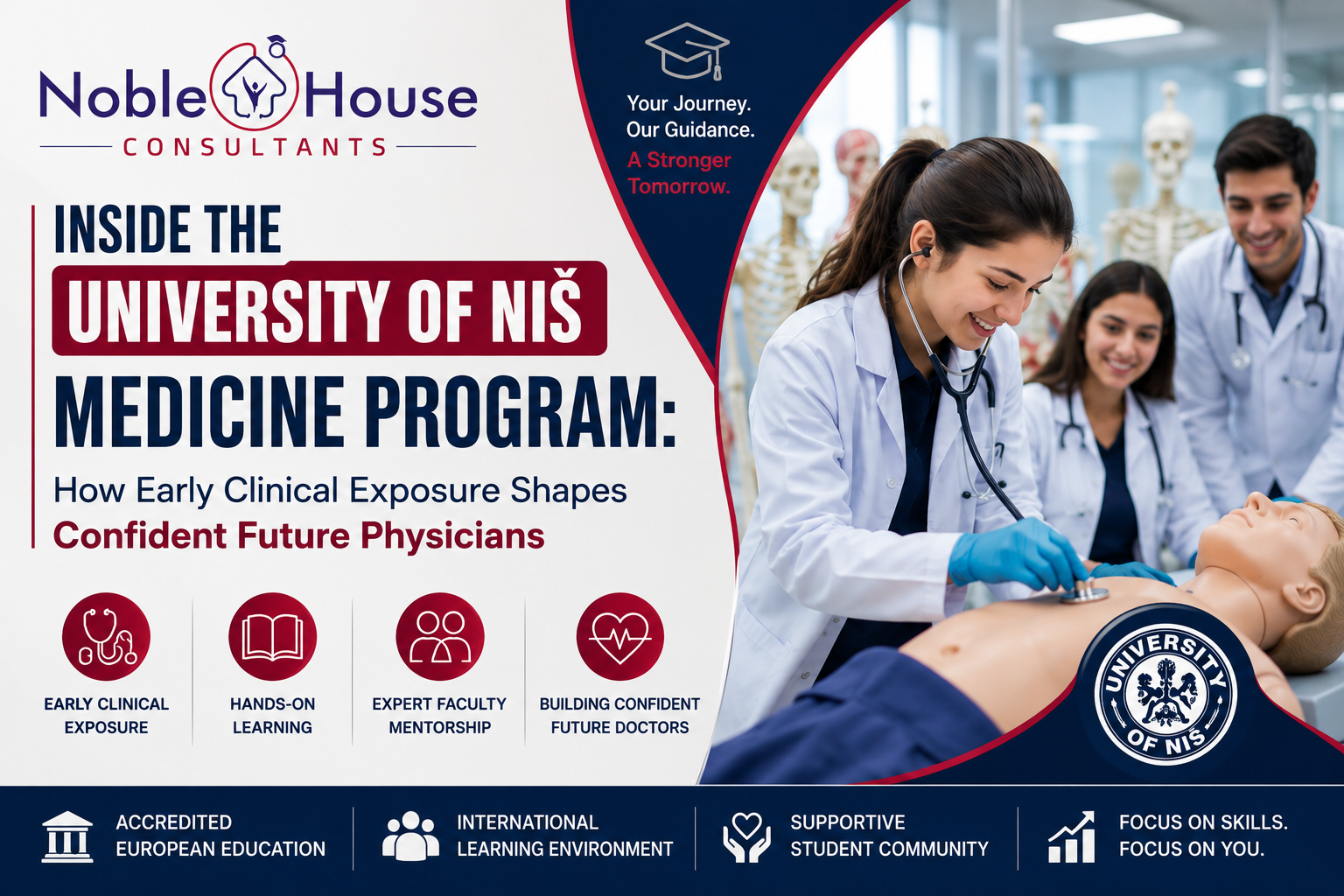
Inside the University of Niš Medicine Program: How Early Clinical Exposure Shapes Confident Future Physicians
Choosing the right medical school is about much more than earning a degree. Students need an environment that combines scientific knowledge, practical experience, and professional development from the very beginning of their education. Many aspiring doctors who wish to study medicine in Serbia are attracted by institutions that balance strong academic foundations with early clinical learning. Among these, the Faculty of Medicine at the University of Niš has developed a curriculum that emphasizes practical skills alongside theoretical excellence, helping students prepare for the realities of modern healthcare.
Building a Strong Foundation Through Early Laboratory Learning
Medical education begins with understanding the science behind the human body. During the first years of study, students develop their knowledge through subjects such as anatomy, histology, physiology, and biochemistry. Rather than relying solely on classroom lectures, the program integrates laboratory work from the very first year.
Students spend time in well-equipped laboratories where they examine anatomical structures, study tissues under microscopes, and gain practical experience with scientific equipment. This hands-on approach allows learners to connect theoretical concepts with real-world observations. Faculty guidance during laboratory sessions also encourages curiosity, critical thinking, and scientific accuracy.
Early laboratory exposure helps students become familiar with the techniques and standards they will continue to use throughout their medical education and future careers.
Learning Through Research and Scientific Exploration
Modern medicine continues to evolve through research, making scientific inquiry an essential part of medical education. Students have opportunities to participate in research projects, collaborate with faculty members, and contribute to scientific discussions during their undergraduate years.
Participation in student conferences, academic seminars, and scientific publications allows learners to develop analytical skills while gaining exposure to current medical developments. These experiences also strengthen communication, teamwork, and evidence-based decision-making.
For students planning to study medicine in Serbia, early research involvement provides valuable academic experience while encouraging lifelong learning and professional growth.
The Importance of Early Clinical Exposure
One of the defining strengths of the program is the gradual introduction of students to clinical medicine. Rather than waiting until the final years, learners begin interacting with patients during the third year through internal propaedeutics and introductory clinical training.
This transition allows students to observe how medical knowledge is applied in real healthcare settings. Under faculty supervision, they begin learning fundamental clinical skills such as patient communication, medical history taking, basic examinations, and professional ethics.
Early patient interaction builds confidence while helping students understand the human side of medicine. It also develops empathy, professionalism, and effective communication—qualities that are just as important as scientific knowledge in becoming a successful physician.
Clinical Training in a Modern Healthcare Environment
Practical learning continues extensively through training at the University Clinical Center of Niš, where students observe diverse medical cases across multiple specialties.
Working in an active teaching hospital enables students to witness diagnostic procedures, treatment planning, patient management, and multidisciplinary healthcare delivery. Exposure to a wide variety of medical conditions helps learners understand how diseases present differently among patients while reinforcing classroom learning through real clinical experience.
Students interested in study medicine in Serbia often value programs that provide meaningful hospital-based education because it prepares them for clinical responsibilities long before graduation.
Developing Practical Skills Throughout the Curriculum
Clinical competence develops gradually through repeated practice. Throughout the program, students participate in practical classes designed to strengthen their technical and communication skills.
Training includes:
- Patient interviewing and history taking
- Basic physical examination techniques
- Clinical observation
- Diagnostic reasoning
- Laboratory interpretation
- Professional communication
- Ethical decision-making
- Team-based healthcare practice
This progressive approach allows students to become increasingly comfortable in clinical environments while improving their confidence and clinical judgment.
Extensive Final-Year Clinical Practice
The final stage of medical education places significant emphasis on supervised clinical practice. Students spend hundreds of hours participating in hospital-based internships that allow them to integrate everything learned during previous years.
These internships provide opportunities to work alongside experienced physicians while rotating through various departments. Students become involved in patient care, observe clinical decision-making, and continue developing practical skills under professional supervision.
This intensive clinical preparation helps bridge the gap between medical school and professional practice, ensuring graduates enter the healthcare workforce with practical experience as well as academic knowledge.
A Supportive Learning Environment
Medical education can be challenging, making supportive mentorship an important component of student success. Faculty members guide students throughout both laboratory and clinical training, encouraging questions, discussion, and continuous improvement.
Small-group practical sessions often allow more personalized instruction, helping students strengthen areas where additional practice is needed. Constructive feedback during clinical rotations also supports the development of confidence and competence over time.
Such mentorship contributes significantly to the educational experience at the Nis Serbia medical university, where academic learning and professional guidance work together to prepare future physicians.
Preparing for Modern Medical Practice
Healthcare today requires physicians who can combine scientific knowledge with communication, teamwork, and ethical responsibility. The curriculum reflects these expectations by integrating laboratory science, research participation, and progressive clinical exposure throughout the medical program.
Students not only acquire medical knowledge but also learn how to make informed clinical decisions, communicate effectively with patients, and adapt to evolving healthcare technologies and practices.
For anyone considering a medical university in Serbia, understanding how practical training is integrated into the curriculum can be an important factor when evaluating educational opportunities. Early clinical exposure provides valuable experience that supports both academic success and professional readiness.
Your Global Medical Journey Starts Here with Noble House Consultants
Turning your dream of studying medicine abroad into reality becomes much easier with Noble House Consultants by your side. As a UAE-based education support consultancy, we guide students through every stage of their overseas education journey—from selecting the right university and course to admissions, visa assistance, travel guidance, and ongoing onsite support. Our experienced counsellors offer personalized guidance, direct interview support, and cost-effective services tailored to your individual goals.
Whether you’re planning to pursue medicine or other professional programs in countries such as Serbia, Poland, Georgia, Turkey, or the UK, we are committed to making the process smooth, transparent, and stress-free. With our long-term student support network and dedication to helping aspiring professionals achieve their academic ambitions, we strive to ensure you begin your international education journey with confidence.
Conclusion
Medical education is most effective when theory and practice develop together. The Faculty of Medicine at the University of Niš demonstrates this approach by introducing laboratory experience from the first year, encouraging undergraduate research, providing early patient interaction, and offering extensive clinical training before graduation. This carefully structured progression enables students to build confidence, strengthen practical skills, and prepare for the responsibilities of modern medical practice. For aspiring doctors looking to study medicine in Serbia, understanding how early clinical exposure contributes to professional growth can help them make informed decisions about their medical education and future career.
Frequently Asked Questions
1. What makes the University of Niš Medicine program unique?
The program combines early laboratory training, undergraduate research opportunities, and clinical exposure from the third year, helping students build practical skills alongside theoretical knowledge.
2. When do students begin clinical training at the University of Niš?
Students start direct patient interaction in their third year through internal propaedeutics, where they learn basic clinical skills and bedside communication under faculty supervision.
3. Does the program include practical hospital experience?
Yes. Students receive extensive clinical training at the University Clinical Center of Niš, gaining exposure to real patient cases, diagnostic procedures, and multidisciplinary healthcare practices.
4. Are research opportunities available for medical students?
Yes. Undergraduate students can participate in research projects, present at student scientific conferences, and contribute to academic publications under faculty guidance.
5. What practical skills do students develop during the course?
Students learn patient communication, history taking, physical examination techniques, clinical observation, diagnostic reasoning, laboratory interpretation, and professional ethics throughout the curriculum.
6. Is there an internship before graduation?
Yes. The final year includes extensive supervised clinical practice, allowing students to apply their medical knowledge in real healthcare settings before earning their degree.
About Author

Post a Comment