- M-floor, Al Makhawi Building. Umm Hurair Road, Oud Metha, Dubai – UAE
- advisor@noblehouseconsultants.com
- +971508759073 +971508758925


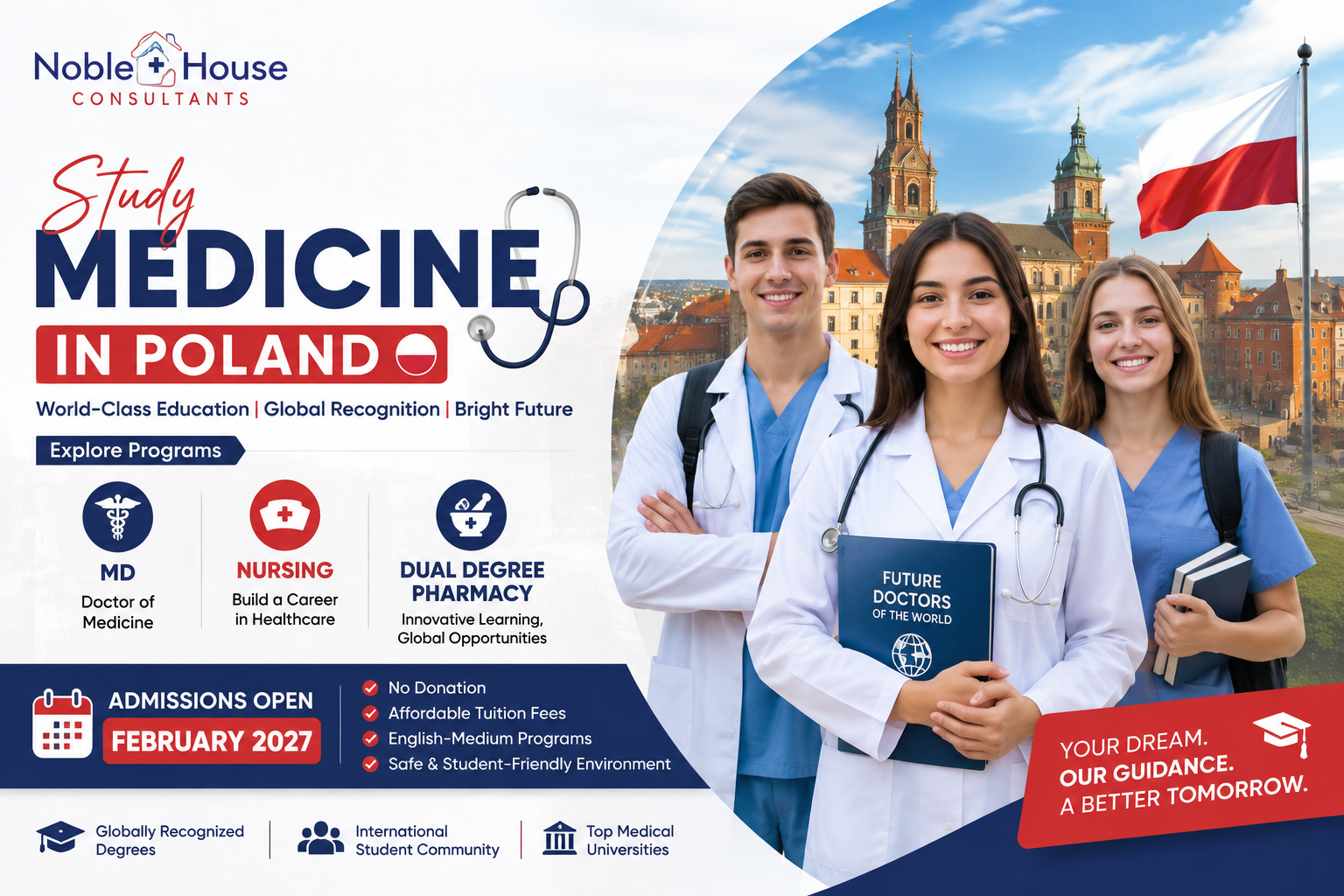
Study Medicine in Poland: Explore MD, Nursing & Dual Degree Pharmacy Admissions for February 2027
Choosing the right destination for higher education is one of the most important decisions for students planning a career in healthcare. With internationally oriented academic programmes, modern medical infrastructure, and comparatively affordable education, Poland has become an attractive destination for aspiring healthcare professionals. Students interested in pursuing medical education in Europe can Study Medicine in Poland and explore opportunities across Medicine (MD), Nursing, and Dual Degree Pharmacy programmes. With applications opening for the February 2027 semester, this is an excellent time to understand the available courses, eligibility requirements, academic benefits, and future career possibilities.
Why Is Poland Becoming a Popular Destination for Medical Education?
Poland offers an educational environment that combines traditional academic excellence with modern healthcare practices. Its universities provide structured medical programmes that focus on theoretical knowledge, practical learning, research, and clinical exposure.
One of the biggest advantages is the opportunity to study in English. International students can access selected medical programmes without necessarily having to learn Polish before beginning their academic journey. However, learning basic Polish can be beneficial, particularly when interacting with patients during clinical training.
Students who Study Medicine in Poland can also experience European academic culture, interact with classmates from different countries, and develop an international perspective on healthcare.
1. Medicine (MD): Build a Strong Foundation for a Medical Career
Medicine remains one of the most sought-after healthcare programmes among international students. The six-year MD programme is designed to develop the knowledge, clinical understanding, and professional skills required to pursue a career as a doctor.
The curriculum generally covers fundamental subjects such as anatomy, physiology, biochemistry, pathology, pharmacology, and microbiology. As students progress, they gain exposure to clinical disciplines, patient care, diagnostic procedures, and hospital-based learning.
Key highlights of the MD programme:
- Six-year academic programme.
- English-taught learning opportunities at selected universities.
- Strong emphasis on theoretical and practical medical education.
- Clinical exposure through affiliated teaching hospitals.
- Opportunities to develop research and patient-care skills.
Students planning to Study Medicine in Poland should understand that medical education requires consistent academic effort, practical dedication, and a genuine interest in helping people. The MD pathway can be a suitable choice for students who aspire to work in hospitals, healthcare institutions, research environments, or other medical settings.
2. Nursing: Develop Skills to Make a Difference in Healthcare
Nursing is an essential part of every healthcare system. Nurses play a significant role in patient monitoring, treatment support, rehabilitation, preventive healthcare, and emotional assistance.
The three-year Bachelor’s degree in Nursing focuses on developing practical healthcare skills alongside academic knowledge. Students learn about human anatomy, patient assessment, nursing procedures, healthcare ethics, infection prevention, and clinical care.
What makes Nursing an attractive career option?
- A structured three-year Bachelor’s degree.
- Practical training in healthcare environments.
- Opportunities to develop patient-care and communication skills.
- Exposure to modern nursing practices.
- Potential career pathways in hospitals, clinics, community healthcare, and specialised care facilities.
Students who wish to study nursing in Poland can benefit from an educational approach that combines classroom learning with practical experience. The programme is particularly suitable for individuals who are compassionate, responsible, patient, and interested in making a meaningful contribution to society.
However, students should check the language requirements for clinical placements, as communicating effectively with local patients may require Polish language proficiency.
3. Dual Degree Pharmacy: Explore Opportunities in Pharmaceutical Sciences
Pharmacy is another promising field for students interested in medicines, pharmaceutical research, drug development, and patient-focused healthcare.
A Dual Degree Pharmacy pathway offers an integrated academic approach that combines pharmaceutical science with practical clinical learning. Depending on the university and programme structure, students may gain exposure to different areas of pharmaceutical education and qualifications.
Important areas of pharmacy education include:
- Pharmaceutical chemistry.
- Pharmacology and toxicology.
- Pharmaceutical technology.
- Clinical pharmacy.
- Drug safety and medication management.
- Pharmaceutical research and development.
Students looking to study pharmacy in Poland should carefully examine the curriculum, programme duration, awarding institutions, and exact qualifications offered by each university.
A pharmacy qualification can create opportunities in community pharmacies, hospital pharmacies, pharmaceutical industries, research laboratories, and medicine-related regulatory fields, subject to the relevant professional registration requirements.
Why Choose Poland for Healthcare Studies?
Poland offers several advantages that make it worth considering for international students.
1. European Academic Exposure
Studying in Poland allows students to experience European higher education standards and an international learning environment. They can interact with students from different cultural and academic backgrounds while developing a broader understanding of healthcare systems.
2. Affordable Education and Living Expenses
Compared with several popular destinations in Western Europe, the UK, and the USA, Poland can offer comparatively affordable tuition fees and living expenses. Students should still prepare a realistic financial plan covering tuition, accommodation, food, transportation, health insurance, and other personal expenses.
3. Modern Medical Infrastructure
Medical universities in Poland provide access to modern laboratories, simulation facilities, and clinical learning environments. These resources help students connect academic concepts with practical healthcare applications.
4. English-Taught Programmes
Several Polish universities offer healthcare programmes in English, making them accessible to international applicants. Some institutions may accept an English Medium of Instruction (MOI) certificate instead of IELTS or TOEFL, depending on their admission policies.
5. International Career Possibilities
Polish medical qualifications may provide pathways towards professional opportunities in different countries. However, recognition is not automatically guaranteed everywhere. Graduates must meet the licensing, registration, language, examination, and other professional requirements of the country where they intend to practise.
February 2027 Admissions: Eligibility and Preparation
Students interested in the February 2027 intake should begin preparing their academic documents and understanding university-specific admission requirements.
For Medicine and other science-based healthcare programmes, applicants may need a strong academic background in subjects such as Biology, Chemistry, and Physics. Some universities may also conduct entrance examinations, interviews, or additional academic assessments.
Commonly required documents may include:
- Class 10 and Class 12 academic certificates.
- Academic transcripts and mark sheets.
- Valid passport.
- Passport-sized photographs.
- English proficiency proof, where applicable.
- Medical fitness documents, if required.
- University-specific application forms and supporting documents.
Admission requirements can vary significantly between universities and programmes. Therefore, students should verify the latest February 2027 admission guidelines directly with their chosen institutions.
How to Choose the Right Medical University in Poland
Selecting a university requires more than comparing tuition fees or course duration. Students should evaluate several important factors before making their final decision.
First, check whether the university is officially recognised and authorised to offer the selected programme. Next, review the curriculum, teaching facilities, clinical training arrangements, faculty experience, and international student support.
It is equally important to understand the exact qualification awarded after graduation and whether it meets the professional registration requirements of your intended career destination.
For students planning to Study Medicine in Poland, researching these factors early can help avoid confusion and support a more informed academic decision.
Turn Your Medical Dreams into Reality with Noble House Consultants
At Noble House Consultants, we help aspiring healthcare professionals take confident steps towards international education. From university selection and admission guidance to visa assistance and onsite support, we offer personalised support throughout your study abroad journey. Explore medical, nursing, and pharmacy opportunities in Poland and take the first step towards a rewarding global healthcare career.
Conclusion
Poland offers promising opportunities for students who want to build a future in healthcare through Medicine, Nursing, or Pharmacy. With English-taught programmes, modern educational facilities, practical clinical exposure, and comparatively affordable study options, it deserves consideration as an international education destination.
The February 2027 semester can be an exciting opportunity for students ready to take the next step towards their professional goals. Whether you aspire to become a doctor, develop a nursing career, or explore pharmaceutical sciences, carefully compare universities, understand eligibility requirements, and prepare your applications in advance.
If you are planning to Study Medicine in Poland, start researching your preferred programme today and take a well-informed step towards building a rewarding career in the global healthcare sector.
Frequently Asked Questions
1. Why should international students choose Poland for medical studies?
Poland offers English-taught medical programmes, modern clinical facilities, international academic exposure, and comparatively affordable tuition and living expenses.
2. What healthcare programmes are available in Poland for February 2027?
Students can explore Medicine (MD), Nursing, and Dual Degree Pharmacy programmes at selected Polish universities.
3. How long does the Medicine (MD) programme take in Poland?
The Medicine (MD) programme generally takes six years to complete, including theoretical education and clinical training.
4. Can international students study Nursing in Poland in English?
Yes, selected Polish universities offer English-taught Nursing programmes. Students should check individual university requirements and clinical language expectations.
5. What is a Dual Degree Pharmacy programme in Poland?
It is an integrated academic pathway combining pharmaceutical sciences with practical clinical learning. The exact degree structure and qualifications depend on the university.
6. Is IELTS or TOEFL mandatory for admission to Polish medical universities?
Not always. Some universities accept an English Medium of Instruction (MOI) certificate, while others may require IELTS, TOEFL, or an alternative English proficiency assessment.
7. Are medical degrees from Poland recognised internationally?
Polish medical qualifications can offer international career opportunities. However, graduates must meet the licensing, registration, examination, and language requirements of their intended country of practice.
About Author

Post a Comment