- M-floor, Al Makhawi Building. Umm Hurair Road, Oud Metha, Dubai – UAE
- advisor@noblehouseconsultants.com
- +971508759073 +971508758925


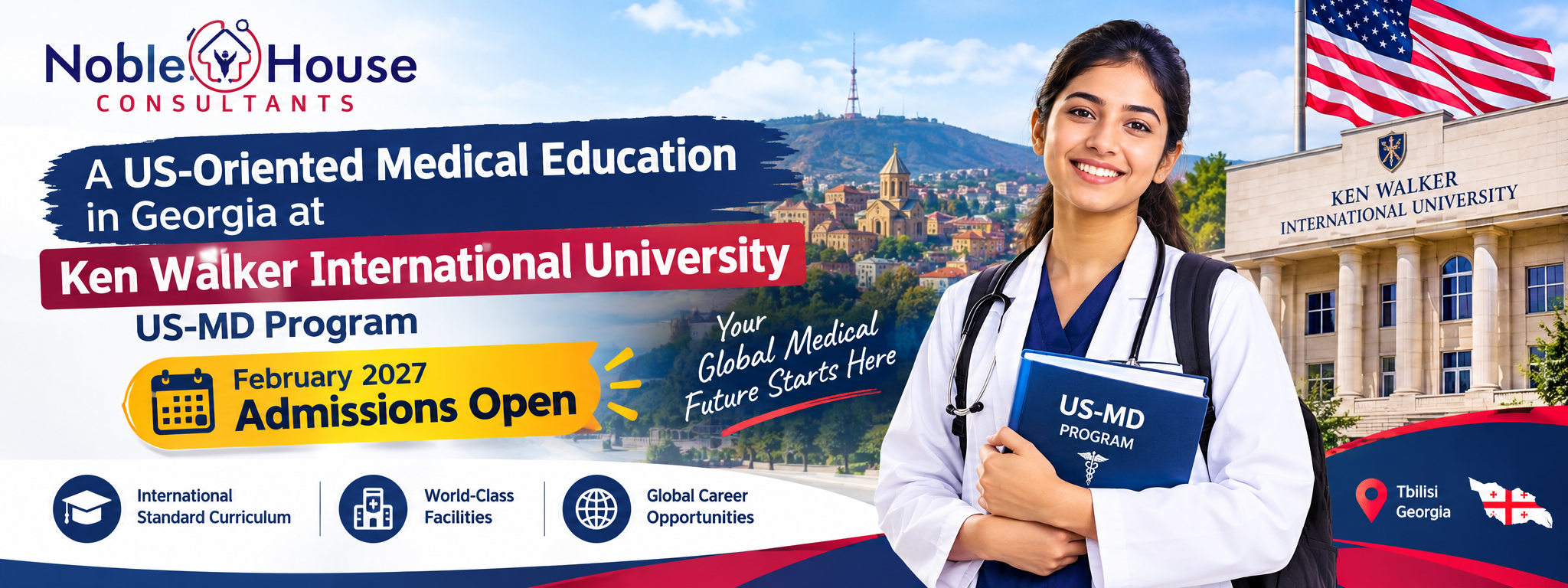
A US-Oriented Medical Education in Georgia at Ken Walker International University – US-MD Program: February 2027 Admissions Open
Medical education is evolving rapidly, with aspiring doctors increasingly looking for academic programs that combine international perspectives, practical clinical exposure, and modern teaching methodologies. For students who want to build a strong foundation in medicine while exploring global career opportunities, Georgia has emerged as an option worth considering. Among the institutions offering English-medium medical education, Ken Walker International University (KWIU) in Tbilisi provides a six-year Medical Doctor (MD) program designed around a US-oriented curriculum.
Pursuing a US-oriented medical education in Georgia can offer students an opportunity to experience an American-influenced approach to medical learning within a European educational setting. The US-MD program at Ken Walker International University emphasizes foundational medical sciences, problem-based learning, case-based learning, and clinical training. As the February 2027 admission intake draws near, aspiring medical students can explore the program’s curriculum, eligibility requirements, and future career opportunities worldwide.
Understanding the US-MD Program at Ken Walker International University
Ken Walker International University, located in Tbilisi, Georgia, offers a six-year Medical Doctor program delivered entirely in English. The program is designed to provide students with a comprehensive understanding of medical science and its practical application in clinical settings.
The curriculum follows a US-oriented educational approach that emphasizes analytical thinking, clinical reasoning, and the application of theoretical knowledge to real-world medical situations. Rather than focusing exclusively on memorization, students are encouraged to understand medical concepts, evaluate clinical scenarios, and develop problem-solving abilities.
For international students, studying in an English-medium environment can also make it easier to access medical textbooks, research publications, and other academic resources used worldwide. This learning environment can help students develop communication skills that are valuable when working with diverse patient populations and healthcare professionals.
What Makes a US-Oriented Medical Curriculum Different?
Traditional medical education often places considerable emphasis on acquiring theoretical knowledge before applying it in clinical situations. A US-oriented curriculum seeks to strengthen the connection between scientific concepts and practical decision-making throughout medical training.
At Ken Walker International University, the educational approach incorporates problem-based learning (PBL) and case-based learning (CBL). These methods encourage students to participate actively in the learning process, discuss medical scenarios, and develop logical approaches to clinical problems.
Problem-based learning introduces students to questions or situations that require investigation and independent learning. Case-based learning uses clinical examples to help students connect medical knowledge with possible diagnoses, investigations, and treatment considerations.
Such methods can help aspiring doctors develop a more structured approach to clinical reasoning. Students also benefit from learning how different medical disciplines interact, providing a broader understanding of patient care.
For those seeking a US-oriented medical education in Georgia, these teaching approaches can be an important consideration when comparing international medical programs. However, students should remember that a US-oriented curriculum does not automatically guarantee admission to postgraduate training or medical practice in the United States. Licensing criteria and eligibility requirements should be verified independently.
.
Six Years of Comprehensive Medical Training
The US-MD program at Ken Walker International University follows a six-year structure comprising foundational medical sciences and clinical education. The program is described as carrying a total of 360 European Credit Transfer and Accumulation System (ECTS) credits.
This extended period of study allows students to progress from understanding the basic mechanisms of the human body to examining more complex medical conditions and clinical situations.
1. Foundational Medical Sciences
The early stages of medical education establish the scientific knowledge required for clinical practice. Subjects such as anatomy, physiology, biochemistry, and other core medical sciences help students understand how the human body functions and how diseases develop.
A strong understanding of these subjects is essential for interpreting symptoms, evaluating diagnostic information, and making informed clinical decisions in later stages of training.
2. Integration of Theory and Clinical Thinking
As students advance through the curriculum, they can develop the ability to apply scientific principles to medical cases. Case discussions, structured problem-solving, and clinical reasoning exercises help bridge the gap between textbook knowledge and patient care.
3. Clinical Training and Rotations
Clinical education allows medical students to become familiar with healthcare environments, patient interactions, and the practical responsibilities of medical professionals. Clinical rotations can provide exposure to different specialties and help students understand how healthcare teams work together.
The specific timing, clinical placement arrangements, and requirements should be confirmed directly with the university before enrollment.
Why Consider Medical Education in Georgia?
Georgia has attracted international students interested in medical education because several universities offer English-medium programs in an international academic environment. Tbilisi, the country’s capital, provides a setting in which students can experience a different culture while pursuing their academic goals.
For students considering a US-oriented medical education in Georgia, the combination of an English-medium curriculum and a US-influenced teaching approach may be particularly appealing. Studying abroad can also encourage independence, cultural awareness, adaptability, and communication skills.
Living in another country exposes students to different social environments and healthcare perspectives. These experiences may contribute to their personal development and help them become more comfortable interacting with people from diverse backgrounds.
Nevertheless, choosing a medical university requires more than comparing countries or teaching approaches. Students should examine the curriculum, clinical training arrangements, faculty expertise, academic support, accommodation options, living expenses, and official recognition status of the institution.
Preparing for the USMLE and International Career Pathways
The United States Medical Licensing Examination (USMLE) is an important part of the pathway for physicians seeking to pursue medical training or licensure in the United States. A curriculum that emphasizes clinical reasoning, integrated medical sciences, and case-based learning may help students build relevant foundational knowledge.
The US-MD program’s American-influenced educational approach can therefore be useful for students who intend to explore the USMLE pathway in the future. However, students should understand that preparing for licensing examinations requires sustained individual study, practice questions, revision, and a thorough understanding of the applicable examination requirements.
Students planning to pursue medical careers in the United States should independently verify their eligibility with the relevant official authorities before enrolling. University attendance alone does not guarantee eligibility for USMLE examinations, residency placement, or a medical licence.
Similarly, students intending to return to India must carefully review the applicable National Medical Commission (NMC) regulations. Eligibility may depend on the university, course structure, duration of study, internship requirements, and other conditions in force at the relevant time.
International medical education can create opportunities, but professional recognition always depends on the regulations of the country where a graduate intends to practise.
English-Medium Learning for International Students
Language plays a significant role in medical education. Students must understand complex scientific concepts, communicate with instructors, interpret medical literature, and eventually interact effectively with patients.
Ken Walker International University’s US-MD program is presented as a fully English-medium course, including lectures, learning materials, and examinations. This can help international students develop familiarity with the language used in much of contemporary medical research and academic communication.
English-medium instruction can also support students preparing for international examinations and exploring postgraduate opportunities abroad. Nevertheless, students should be prepared to study diligently, communicate clearly, and develop additional local-language skills when required for patient interaction during clinical training.
An international classroom can further encourage collaboration among students with different educational and cultural backgrounds.
Understanding the Financial Commitment
Affordability is an important consideration for families planning six years of medical education abroad. The annual tuition fee for the Ken Walker International University US-MD program has been reported at approximately USD 7,000.
Based on this indicative figure, tuition alone could total approximately USD 42,000 over six years if the annual fee remains unchanged. This is a simple estimate, not a confirmed total program cost.
Students should obtain the latest official fee schedule before making financial decisions. Tuition may change, and the total cost of education will also depend on accommodation, food, transportation, insurance, books, personal expenses, and other university charges.
Comparing the complete cost of attendance, rather than tuition alone, can help families plan realistically and avoid unexpected financial pressure during the course.
February 2027 Admissions: What Prospective Students Should Know
The February 2027 intake offers prospective students an opportunity to explore the next available enrollment period for the US-MD program at Ken Walker International University. Applicants should begin preparing their academic documents and verifying the current admission requirements well before the intended enrollment date.
A strong background in Biology, Chemistry, Physics, and English can provide a useful academic foundation for medical studies. Applicants may be asked to submit secondary school or high school qualifications for evaluation and formal recognition.
Depending on the university’s current procedures, additional documentation or administrative steps may be required. Students should confirm the application deadline, eligibility criteria, document authentication requirements, tuition payment schedule, and enrollment process directly with the university.
It is also advisable to request written confirmation of the February 2027 intake’s availability and the applicable admission conditions. Preparing documents early can help applicants identify missing information and address potential delays.
Those who want to study USMD program in Georgia should assess their academic readiness, financial resources, and long-term professional goals before committing to a program. A well-informed decision can make the transition to international medical education more manageable.
Is the US-MD Program the Right Choice for You?
The right medical program depends on a student’s individual aspirations, academic strengths, financial circumstances, and preferred career destination.
Ken Walker International University’s US-MD program may appeal to students who value English-medium instruction, an American-influenced curriculum, problem-based learning, and a structured six-year medical education pathway.
Before applying, prospective students should review the official curriculum, confirm the university’s current authorization and accreditation details, investigate clinical training opportunities, and verify whether the qualification meets the requirements of their intended country of practice.
Students should also distinguish between international institutional recognition, educational quality assurance, and eligibility for professional licensing. These are related but separate matters, and each should be verified using the relevant official sources.
Turn Your Medical Dreams into Reality with Noble House Consultants!
Noble House Consultants helps aspiring medical students pursue their dreams through personalized admission guidance. With seven years of experience, the UAE-based consultancy assists students exploring Ken Walker International University’s US-MD program in Georgia, offering university selection, documentation, visa guidance, and onsite support for a smoother study-abroad journey.
Conclusion
Choosing a medical university is a significant decision that can influence a student’s academic development and future professional opportunities. Ken Walker International University’s six-year, English-medium US-MD program in Tbilisi offers an American-influenced curriculum that combines foundational medical sciences with problem-based learning, case-based learning, and clinical education.
For students exploring a US-oriented medical education in Georgia, the program presents an opportunity to investigate an international learning environment while developing the knowledge and reasoning skills needed for medical practice. The reported tuition of approximately USD 7,000 per year may also be worth considering when comparing educational options, provided the latest fees and additional expenses are verified.
With February 2027 admissions approaching, prospective applicants should review the official entry requirements, prepare their academic documents, and carefully assess recognition and licensing conditions for their intended career destination. Thorough research and realistic planning can help students make a confident, informed decision about their future in medicine.
Frequently Asked Questions
1. What is the US-MD program at KWIU?
It is a six-year Medical Doctor program in Tbilisi, Georgia, featuring an English-medium, US-oriented curriculum.
2. Is the KWIU US-MD program taught in English?
Yes, the program is designed to deliver lectures, study materials, and examinations in English.
3. How long does the US-MD program take to complete?
The program follows a six-year structure combining foundational medical sciences and clinical education.
4. When does the next KWIU admission intake begin?
The February 2027 intake is the upcoming admission period mentioned for prospective students. Confirm availability and deadlines with the university.
5. What are the academic requirements for admission?
Applicants generally need secondary school qualifications and a strong foundation in Biology, Chemistry, Physics, and English. Confirm the current criteria with KWIU.
6. Can KWIU graduates pursue medical careers in the USA or India?
Potentially, subject to the relevant licensing examinations, eligibility requirements, and regulations in the intended country of practice.
7. How can Noble House Consultants help with admission?
Noble House Consultants offers guidance on university selection, admission documents, visa procedures, and other aspects of studying abroad.
About Author

Post a Comment