- M-floor, Al Makhawi Building. Umm Hurair Road, Oud Metha, Dubai – UAE
- advisor@noblehouseconsultants.com
- +971508759073 +971508758925


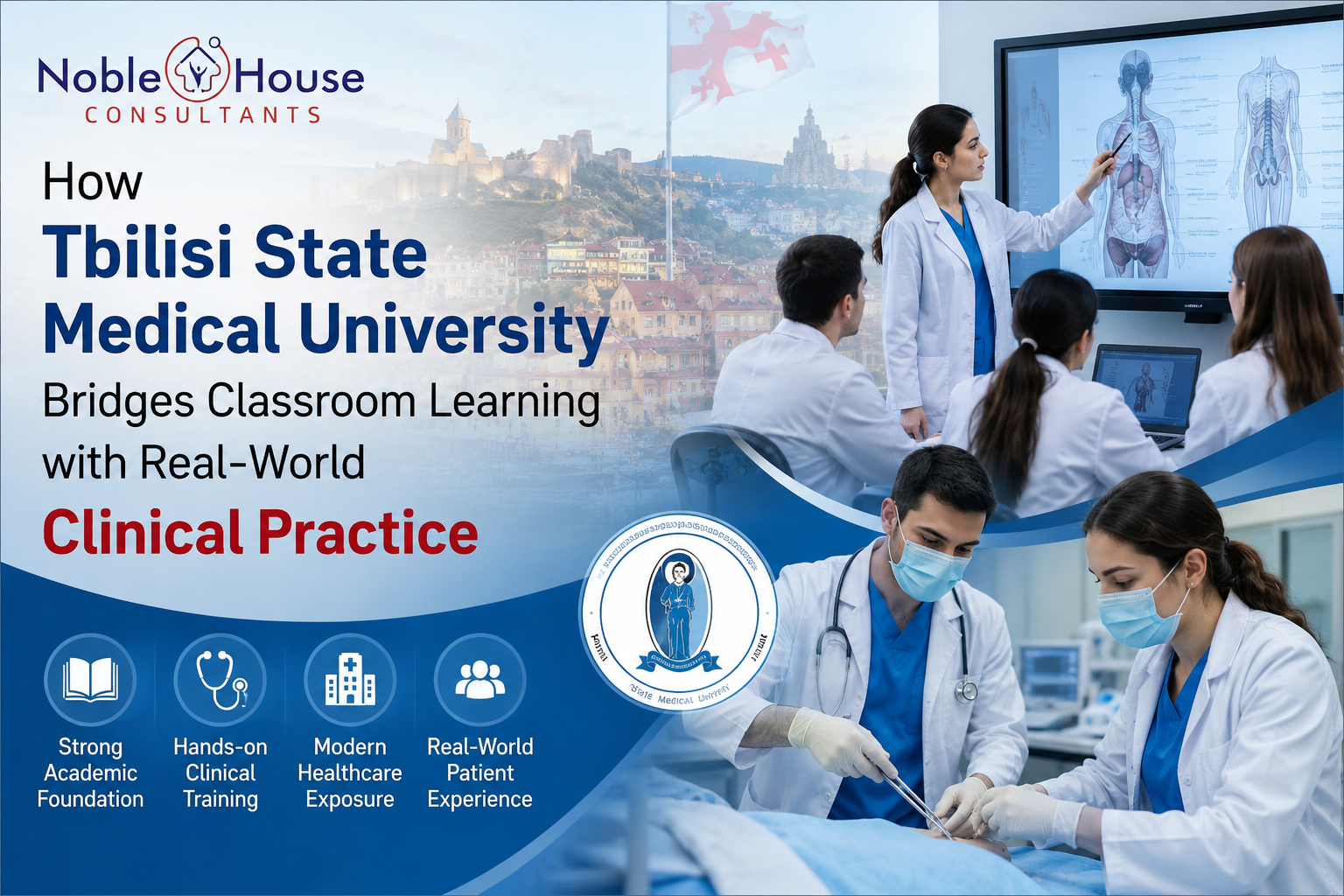
How Tbilisi State Medical University Bridges Classroom Learning with Real-World Clinical Practice
Choosing the right medical university is one of the most important decisions for aspiring doctors. While a strong academic curriculum is essential, practical clinical exposure plays an equally important role in shaping competent healthcare professionals. Tbilisi State Medical University (TSMU) has earned recognition for combining classroom education with extensive hands-on clinical training, ensuring students are prepared for real-world medical practice.
Many international students who plan to study medicine in Georgia look for universities that offer early patient interaction, structured clinical learning, and modern teaching methods. TSMU stands out because it emphasizes practical experience alongside theoretical knowledge, helping students develop confidence and clinical competence throughout their medical education.
Why Practical Clinical Training Matters
Medicine is a profession that requires much more than memorizing textbooks. Doctors must communicate effectively, perform clinical procedures accurately, think critically under pressure, and make informed decisions that directly affect patients’ lives.
A medical university that focuses only on lectures may leave students underprepared for hospital environments. Practical exposure allows students to:
- Understand patient care in real clinical settings.
- Develop diagnostic and problem-solving skills.
- Learn professional ethics and responsibilities.
- Improve communication with patients and healthcare teams.
- Gain confidence before entering independent medical practice.
TSMU integrates these elements into its medical education from the early years of study.
Learning Through University-Affiliated Hospitals
One of the strongest aspects of TSMU’s education system is its connection with university-affiliated hospitals. These teaching hospitals create an ideal environment where students can observe experienced physicians while gradually participating in supervised clinical activities.
Rather than limiting education to lecture halls, students experience how diseases are diagnosed, treated, and managed in actual healthcare settings. Early exposure to real patient cases helps bridge the gap between theoretical concepts and practical application.
Students gain valuable insights into various medical specialties, including:
- Internal medicine
- General surgery
- Cardiology
- Pediatrics
- Emergency medicine
- Obstetrics and gynecology
This gradual transition into clinical practice helps students become comfortable working in professional healthcare environments.
Early Clinical Exposure Builds Confidence
Unlike traditional medical education models where clinical experience begins much later, TSMU introduces students to patient observation during the earlier stages of their education.
Observing numerous patient cases enables students to connect classroom knowledge with real medical conditions. They begin understanding disease progression, clinical symptoms, diagnostic investigations, and treatment planning much earlier than expected.
This approach also strengthens analytical thinking because students learn how physicians evaluate symptoms, interpret findings, and arrive at clinical decisions.
For students planning to study medicine in Georgia, early clinical exposure is one of the major advantages that supports both academic learning and future professional development.
Simulation-Based Medical Education
Before interacting directly with patients, students receive extensive practice in advanced simulation laboratories. These simulation centers recreate realistic healthcare scenarios that allow students to improve their technical and decision-making skills without placing patient safety at risk.
Simulation-based education helps students practice:
- Patient history taking
- Physical examinations
- Emergency response
- Basic and advanced clinical procedures
- Team-based medical decision making
- Critical care management
High-fidelity simulation equipment closely resembles actual clinical situations, allowing students to build practical confidence before entering hospital rotations.
Because mistakes become valuable learning experiences in simulation settings, students are better prepared for real patient care.
Structured Clinical Rotations Across Medical Specialties
Clinical rotations are a major component of medical education at TSMU. These supervised rotations expose students to multiple specialties while allowing them to participate in patient care under the guidance of experienced faculty members.
Students rotate through departments such as:
- Internal Medicine
- Surgery
- Pediatrics
- Cardiology
- Neurology
- Orthopedics
- Obstetrics and Gynecology
- Emergency Medicine
Each rotation focuses on developing clinical reasoning, patient assessment, diagnostic interpretation, and treatment planning.
This structured progression ensures that graduates possess broad clinical exposure before completing their medical degree.
Many students who wish to study medicine in Georgia consider this extensive clinical training an important factor when selecting a university.
Objective Structured Clinical Examination (OSCE)
Practical competence is evaluated through the Objective Structured Clinical Examination (OSCE), an internationally recognized method of assessing clinical skills.
Instead of relying only on written examinations, students complete multiple assessment stations where they demonstrate practical abilities under observation.
These stations evaluate skills such as:
- Clinical examination techniques
- Intravenous cannulation
- Catheterization
- Patient communication
- Clinical reasoning
- Case presentation
- Emergency management
This assessment method ensures that graduates are capable of applying theoretical knowledge in practical healthcare situations.
Developing Strong Communication Skills
Successful doctors require excellent communication abilities in addition to medical knowledge.
TSMU integrates communication training into its curriculum so students learn how to interact respectfully and professionally with patients from different cultural and social backgrounds.
Students develop skills in:
- Building patient trust
- Explaining medical conditions clearly
- Active listening
- Taking comprehensive medical histories
- Delivering health education
- Communicating with multidisciplinary healthcare teams
Strong interpersonal skills improve patient satisfaction and contribute to better healthcare outcomes throughout a doctor’s career.
Modern Teaching Methods That Support Clinical Excellence
TSMU adopts a student-centered approach by combining traditional lectures with practical learning methods.
Teaching strategies include:
- Case-based discussions
- Clinical demonstrations
- Practical laboratory sessions
- Interactive seminars
- Small-group learning
- Simulation exercises
- Clinical ward teaching
This integrated learning environment encourages students to think critically, collaborate effectively, and apply scientific knowledge to real clinical situations.
Students planning to study medicine in Georgia often appreciate universities that combine modern educational practices with extensive clinical exposure, helping them become well-prepared medical professionals.
Understanding Tbilisi State Medical University Fees
Before applying, many students carefully evaluate Tbilisi State Medical University fees to understand the financial commitment involved in pursuing a medical degree abroad.
Along with tuition expenses, students should also consider accommodation, food, health insurance, transportation, study materials, and personal living costs. Creating a realistic financial plan allows students to focus on academics while managing their educational journey comfortably.
Preparing for Tbilisi State Medical University Admission 2026
Students interested in Tbilisi State Medical University admission 2026 should begin preparing their academic documents well in advance.
Applicants should carefully review eligibility requirements, gather necessary educational certificates, prepare identification documents, and remain updated about application timelines. Early preparation helps reduce unnecessary stress and allows students to complete the admission process efficiently.
Why Student Experiences Matter
Reading Tbilisi State Medical University reviews can provide valuable insights into campus life, teaching quality, faculty support, academic environment, hostel facilities, and clinical exposure.
Although individual experiences vary, reviewing different perspectives enables prospective students to understand what they can expect throughout their medical education and make informed decisions based on their career goals.
Building Future-Ready Doctors
Healthcare continues to evolve rapidly with advancements in technology, diagnostics, and patient-centered care. Medical universities must therefore prepare students not only with scientific knowledge but also with practical skills, ethical values, communication abilities, and lifelong learning habits.
TSMU achieves this balance by integrating classroom instruction with hospital-based education, simulation training, structured clinical rotations, practical skill assessments, and professional development.
Graduates leave with stronger clinical confidence, greater decision-making ability, and meaningful real-world experience that supports future medical practice in diverse healthcare settings.
Turn Your Medical Dream into Reality with Expert Guidance
Choosing the right university is only the beginning of your study abroad journey. Noble House Consultants helps students make informed decisions through personalized counseling, admission guidance, visa assistance, and continued onsite support. We work closely with you to identify the right course and university, simplify every step of the application process, and provide reliable assistance until you successfully begin your academic journey abroad. Our goal is to make your overseas education experience smooth, affordable, and rewarding.
Conclusion
Medical education is most effective when theoretical learning is consistently reinforced through practical experience. Tbilisi State Medical University bridges this gap by providing early patient exposure, comprehensive clinical rotations, advanced simulation-based training, structured practical assessments, and continuous skill development throughout the medical program.
For aspiring doctors looking to study medicine in Georgia, this integrated approach offers valuable opportunities to build medical knowledge, practical competence, communication skills, and professional confidence. By combining academic excellence with real-world clinical experience, TSMU helps students prepare for the responsibilities and challenges of modern healthcare while laying a strong foundation for successful medical careers.
Frequently Asked Questions
1. How does Tbilisi State Medical University provide clinical training?
TSMU combines classroom teaching with hospital-based learning, simulation labs, supervised clinical rotations, and practical skill assessments.
2. When do students start interacting with patients at TSMU?
Students gain early clinical exposure by observing real patient cases before progressing to supervised hands-on training.
3. What is the purpose of simulation labs at TSMU?
Simulation labs allow students to practice medical procedures, communication, and emergency management in a safe learning environment before treating real patients.
4. What is an OSCE, and why is it important?
An Objective Structured Clinical Examination (OSCE) assesses students’ practical medical skills through multiple stations, ensuring they are clinically competent before graduation.
5. Why is communication training included in the medical curriculum?
Communication training helps students build patient trust, take accurate medical histories, explain treatments effectively, and work efficiently with healthcare teams.
6. What should students know about Tbilisi State Medical University admission 2026?
Prospective applicants should review the eligibility criteria, prepare the required academic documents, and complete the application process within the announced deadlines.
7. Why do students read Tbilisi State Medical University reviews before applying?
Reviews help prospective students understand the university’s academic environment, clinical exposure, faculty support, and overall student experience before making an informed decision.
About Author

Post a Comment