- M-floor, Al Makhawi Building. Umm Hurair Road, Oud Metha, Dubai – UAE
- advisor@noblehouseconsultants.com
- +971508759073 +971508758925


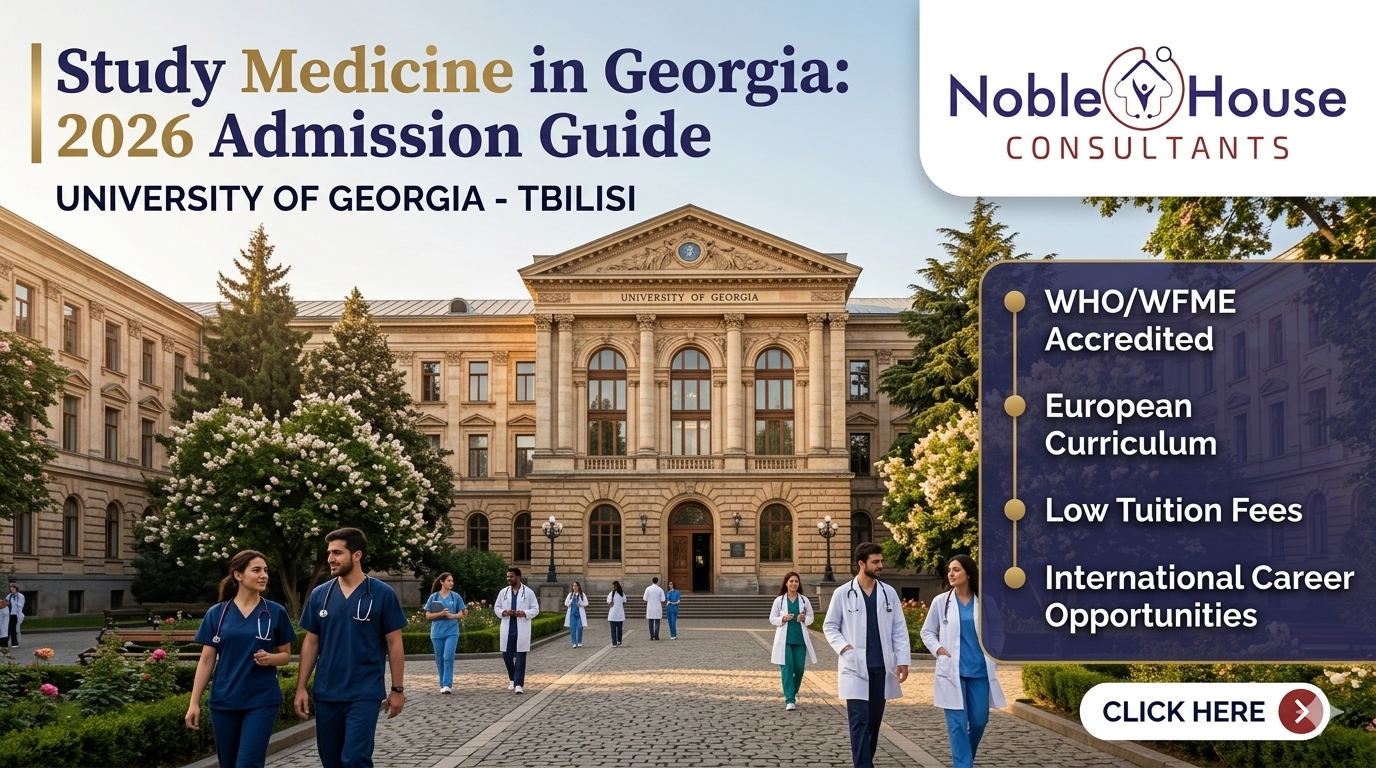
Study Medicine in Georgia: 2026 Admission Guide to University of Georgia
Medical education abroad has become an attractive pathway for students seeking quality education, global exposure, and affordable tuition structures. Among emerging destinations, Georgia has steadily gained recognition for its modern medical universities, English-taught programs, and internationally aligned curriculum. One of the most searched academic journeys today is Study Medicine in Georgia 2026, as students increasingly explore structured and globally accepted MBBS programs in the country.
The University of Georgia offers a well-designed 6-year medical program that focuses on academic excellence, clinical training, and research-based learning. With internationally recognized standards and a student-friendly admission process, it continues to attract applicants from various regions. The program is fully taught in English, making it accessible for international students without language barriers. Additionally, the university emphasizes practical exposure through modern teaching hospitals and laboratories.
In this guide, we will explore everything from admission requirements and eligibility criteria to tuition fees, cost of living, and the step-by-step application process. This will help prospective students understand how to plan their medical education journey efficiently and realistically.
Admission Overview for Medical Studies in Georgia
The admission process for medical studies in Georgia is designed to be straightforward and transparent. Students applying to the University of Georgia for the 2026 intake must complete basic academic and documentation requirements. A key highlight of this pathway is that no complex entrance examination is generally required, which simplifies access to medical education.
For those exploring Study Medicine in Georgia 2026, it is important to understand that the application begins with submitting academic transcripts, passport copies, and other essential documents. Once verified, eligible students receive a provisional admission letter, which serves as confirmation of their academic acceptance.
The program structure is based on international medical education frameworks, combining theoretical learning with clinical exposure from early years. This ensures that students are prepared for global medical licensing pathways in the future.
The phrase University of Georgia admission 2026 is increasingly associated with structured intake cycles, where admissions are processed in multiple stages, allowing students enough time to prepare documentation, financial planning, and travel arrangements.
Eligibility Requirements for Medical Program
To pursue medical education at the University of Georgia, applicants must meet certain basic eligibility conditions. Students are generally required to have completed secondary education with strong academic performance in science subjects, particularly Physics, Chemistry, and Biology. A minimum of approximately 50% aggregate marks in these subjects is typically expected.
Applicants must be at least 17 years of age by the time of admission. English language proficiency is essential since the entire curriculum is delivered in English. However, formal language tests may not always be mandatory, as universities often assess communication ability through academic records or internal evaluation.
Students must also ensure they have valid identification documents, including a passport, academic transcripts, and relevant certificates. Health insurance coverage is another important requirement, ensuring access to medical care during the study period.
When considering MBBS in Georgia eligibility and fees, it is important to note that eligibility criteria remain relatively flexible compared to many other international destinations. This accessibility is one of the key reasons students consider Georgia for medical education.
Tuition Fees and Cost of Living
One of the major advantages of studying medicine in Georgia is its cost-effectiveness compared to many Western countries. The average tuition fee for the 6-year medical program is approximately $6,000 USD per year, making it relatively affordable for international students.
Living expenses in Georgia are also reasonable. On average, students may require around 1,500 to 1,800 AED per month for accommodation, food, transport, and daily necessities. University accommodation options are available, providing safe and convenient living arrangements close to academic facilities.
Overall, the combination of tuition and living costs makes medical education in Georgia financially manageable while still maintaining international academic standards. The balance between affordability and quality education is a major factor driving global interest in this destination.
Admission Process and Step-by-Step Guidance
The admission process for medical studies at the University of Georgia follows a structured and simplified pathway:
- Application Submission: Students submit academic documents such as secondary school transcripts, passport copies, and other required records.
- Provisional Admission Letter: Once documents are reviewed and accepted, the university issues a provisional admission confirmation.
- Fee Payment: Students are required to pay the first-year tuition fee to confirm their seat in the program.
- Visa Application: After receiving official admission confirmation, students apply for a student visa through appropriate government channels.
- Travel and Accommodation: Once the visa is approved, students can arrange travel and secure accommodation before beginning their studies in Georgia.
The entire process is designed to be smooth and student-friendly, allowing international applicants to transition without unnecessary complications.
Recognition and Career Opportunities
The medical program offered is internationally recognized and listed in global medical directories such as WDOMS. It is also acknowledged by global healthcare organizations, ensuring that graduates can pursue further licensing examinations and career opportunities in multiple countries.
The curriculum is designed to align with international medical standards, providing students with a strong foundation in both theoretical and practical medical sciences. Clinical exposure begins early in the program, helping students develop real-world medical skills.
Graduates can explore opportunities in hospitals, research institutions, or pursue further specialization depending on their career goals.
Get an Impactful Guidance on Studying Abroad
Noble House Consultants is dedicated to making your dream of studying medicine abroad a smooth and achievable journey. With our U.A.E-based education support services at M-floor, Al Makhawi Building, Umm Hurair Road, Oud Metha, Dubai, we provide complete guidance for students aspiring to pursue courses like medicine, engineering, and management across countries such as Georgia, Poland, Serbia, Turkey, and the UK. We offer personalized counselling, document assistance, and visa support to ensure a hassle-free admission process. Our team ensures that students receive end-to-end support from consultation to university placement, helping them confidently move toward their academic and professional goals abroad.
Conclusion
Choosing the right destination for medical education is a significant decision that shapes a student’s professional future. Georgia has emerged as a preferred option due to its affordability, quality education system, and globally recognized degrees. The structured admission process, English-taught curriculum, and practical training approach make it a strong choice for aspiring medical professionals.
For students planning ahead, Study Medicine in Georgia 2026 represents an opportunity to access a balanced combination of academic excellence and cost-effective education. With clear eligibility requirements, reasonable tuition fees, and internationally aligned medical training, the University of Georgia continues to be a reliable destination for future doctors aiming for global careers.
Frequently Asked Questions
1. What is the duration of the medical program at the University of Georgia?
The MBBS program is a 6-year course that includes academic study, clinical training, and practical exposure in medical fields.
2. Is an entrance examination required for admission?
No, a separate entrance exam is generally not required. Admission is based on academic eligibility and document verification.
3. What are the basic eligibility criteria for admission?
Students must have completed secondary education with approximately 50% in science subjects and be at least 17 years old by admission time.
4. What is the approximate tuition fee for medical studies?
The tuition fee is approximately $6,000 USD per year, depending on the program and academic year.
5. Are English language tests mandatory?
Formal tests like IELTS are not always mandatory, but students must demonstrate adequate English proficiency.
6. Is the medical degree internationally recognized?
Yes, the degree is listed in global medical directories like WDOMS and is recognized by international healthcare authorities, enabling global career opportunities.
About Author

Post a Comment