- M-floor, Al Makhawi Building. Umm Hurair Road, Oud Metha, Dubai – UAE
- advisor@noblehouseconsultants.com
- +971508759073 +971508758925


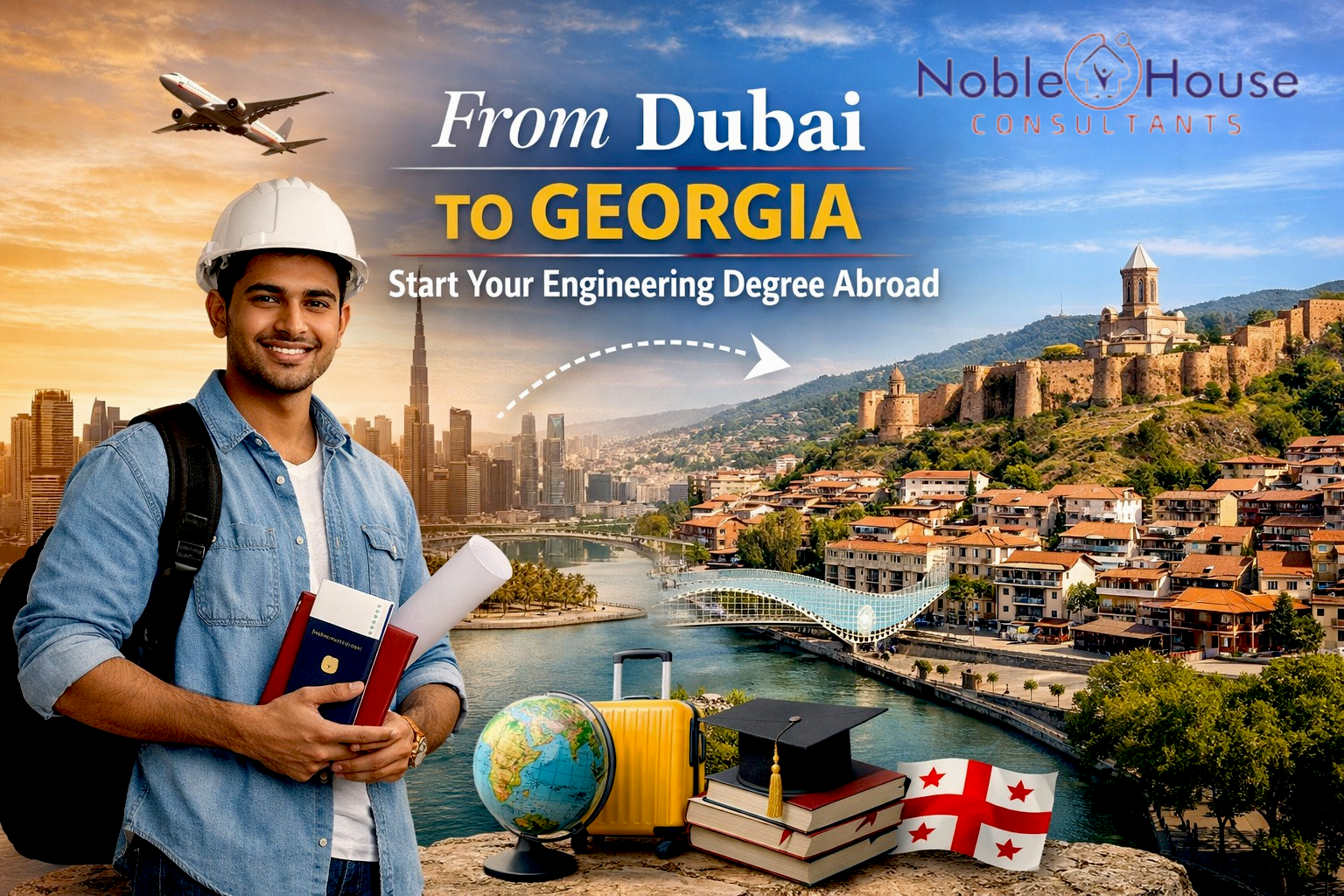
From Dubai to Georgia: How to Start Your Engineering Degree Abroad
Pursuing an engineering degree in Georgia has become an increasingly popular choice for students based in Dubai who are looking for affordable, internationally recognized, and English-taught programs. With streamlined admission procedures, reasonable tuition fees, and a welcoming international environment, Georgia offers a practical pathway for aspiring engineers to begin their academic journey abroad. If you are planning to transition from Dubai to Georgia for higher education, understanding the complete process can help you prepare confidently and avoid unnecessary stress.
Why Choose Georgia for Engineering Studies?
Georgia has positioned itself as an emerging destination for international education, particularly in technical and engineering disciplines. The country offers modern infrastructure, globally aligned curricula, and competitive tuition fees compared to many Western countries. For students from Dubai, the geographical proximity and relatively short travel time make the transition smoother.
An engineering degree in Georgia typically spans four years for undergraduate programs. Most courses are delivered in English, eliminating the need to learn a new language before beginning studies. Additionally, the cost of living remains manageable, making it financially feasible for many families.
Beyond affordability, Georgia provides a safe and culturally diverse environment. International students often find it easy to adapt due to the country’s growing multicultural academic community.
Popular Engineering Specializations
Georgia offers a wide range of engineering disciplines designed to match global industry demands. Students can choose fields based on their academic interests and long-term career goals. Each specialization combines theoretical foundations with applied technical skills to prepare graduates for competitive global industries.
Civil Engineering in Georgia
Those interested in infrastructure development and construction often explore Civil Engineering in Georgia, which focuses on structural design, transportation systems, and urban planning.
- Structural Design: Students learn how to design buildings, bridges, and foundations while ensuring safety and durability.
- Transportation & Urban Systems: Covers highways, rail networks, and smart city planning.
- Environmental Engineering Basics: Includes water supply systems, waste management, and sustainable construction practices.
This specialization is ideal for students who enjoy mathematics, physics, and problem-solving in real-world scenarios.
Computer Science Engineering in Georgia
Technology-driven students frequently consider computer science engineering in Georgia, which emphasizes software development, artificial intelligence, data science, and cybersecurity.
- Programming & Software Development: Programming & Software Development focuses on writing code, building applications, and designing efficient software systems.
- AI & Data Science: AI & Data Science focuses on machine learning technologies and advanced techniques for analyzing and interpreting complex data.
- Cybersecurity & Networking: Cybersecurity & Networking focuses on protecting digital systems while managing and maintaining network infrastructure.
AI & Data Science focuses on machine learning technologies and advanced techniques for analyzing and interpreting complex data.
Mechanical Engineering Schools in Georgia
Students passionate about machinery, manufacturing, and industrial systems often look into mechanical engineering schools in Georgia, where they gain practical knowledge about thermodynamics, robotics, and mechanical design.
- Thermodynamics & Energy Systems: Studies heat transfer and mechanical energy applications.
- Robotics & Automation: Robotics & Automation focuses on designing and operating intelligent machines used in modern industrial processes.
- Mechanical Design & Manufacturing: Mechanical Design & Manufacturing focuses on developing products and applying modern industrial production methods.
This field prepares graduates for careers in automotive, aerospace, and manufacturing sectors.
Electrical Engineering Schools in Georgia
Similarly, those interested in power systems, renewable energy, and electronics may choose electrical engineering schools in Georgia, preparing for careers in energy production, automation, and telecommunications.
- Power Generation & Distribution: Power Generation & Distribution focuses on producing, transmitting, and managing electricity through power grid systems.
- Electronics & Circuit Design: Electronics & Circuit Design focuses on designing electronic components, circuits, and embedded technology systems.
- Renewable Energy & Automation: Includes solar energy systems and industrial control technologies.
Each specialization combines theoretical learning with practical training, ensuring graduates are industry-ready.
Admission Requirements for Students from Dubai
The admission process for engineering programs in Georgia is generally straightforward. Students who have completed their high school education with a science background (including mathematics and physics) are typically eligible to apply.
Most institutions require:
- A valid passport
- High school diploma and academic transcripts
- Passport-sized photographs
- Completed application form
- Proof of English proficiency (often through an interview if standardized test scores are unavailable)
Many programs do not strictly require IELTS or TOEFL if students can demonstrate English communication skills during an online interview. However, requirements may vary, so verifying details in advance is important.
Once the documents are submitted, they are usually reviewed by academic authorities for approval. After receiving confirmation, students are issued an official admission letter, which is necessary for the visa process.
Understanding the Visa Process
Students traveling from Dubai must apply for a long-term student visa. The visa process generally requires:
- Official admission letter
- Proof of sufficient financial funds
- Health insurance coverage
- Accommodation details
- Visa application form and fee payment
Processing times may vary, so applying well in advance of the academic intake is recommended. Once the visa is approved, students can make travel arrangements and prepare for relocation.
Upon arrival in Georgia, international students are typically required to apply for a temporary residence permit to legally stay for the duration of their studies.
Tuition Fees and Living Expenses
One of the biggest advantages of choosing Georgia is affordability. Tuition fees for an engineering degree in Georgia usually range between USD 3,000 and USD 6,000 per year, depending on the specialization.
Living costs are also reasonable compared to many other international study destinations. On average, students may spend between USD 300 and USD 600 per month on accommodation, food, transportation, and personal expenses. Shared apartments and student housing options can further reduce expenses.
Budget planning is essential. Students should calculate tuition, visa fees, insurance, travel costs, and living expenses before making a final decision.
Academic Structure and Learning Environment
Engineering programs in Georgia are structured to balance theory and practical application. Students attend lectures, laboratory sessions, workshops, and project-based assignments. Many programs include internships or industrial training components, helping students gain hands-on experience.
The curriculum is often aligned with European education standards, ensuring global recognition. Graduates can pursue employment opportunities locally or internationally, or even continue with postgraduate studies.
Class sizes are generally moderate, allowing for interactive learning. Faculty members often emphasize innovation, critical thinking, and research-based projects.
Work Opportunities During Studies
International students in Georgia are typically allowed to work part-time while studying. This provides an opportunity to gain professional experience and support living expenses. However, students should ensure that employment does not interfere with academic performance.
Part-time jobs may include roles in hospitality, customer service, or technology sectors, depending on language skills and expertise. Gaining work experience during studies can enhance a graduate’s resume and improve career prospects after completing an engineering degree in Georgia.
Preparing for Cultural Transition
Moving from Dubai to Georgia involves adapting to a new climate, culture, and lifestyle. Georgia experiences distinct seasons, including cold winters, which may be different from the UAE’s desert climate.
Students are encouraged to:
- Research local customs and traditions
- Learn basic phrases in the local language
- Connect with international student communities
- Arrange accommodation before arrival
Being culturally prepared can make the transition smoother and more enjoyable.
Key Intakes and Timeline Planning
Most engineering programs offer two main intakes: Fall (September) and Spring (February or March). Students should begin preparing at least six months before their intended intake.
A suggested timeline includes:
- Research programs and specializations
- Prepare academic documents
- Submit applications
- Attend interviews (if required)
- Receive admission confirmation
- Apply for visa
- Arrange accommodation and travel
Early preparation ensures you meet all deadlines without unnecessary pressure.
Turn Your Global Education Dreams into Reality with Noble House Consultants
Noble House Consultants is a UAE-based education support service dedicated to helping students achieve their global academic goals with confidence. With extensive experience, we offer personalized guidance for students pursuing medicine, engineering, management, and other professional programs at top international study destinations. We assist our students through direct interview preparation, complete visa documentation support, and personalized counselling to ensure a smooth admission journey. Whether you are planning to pursue an engineering degree in Georgia or another sought-after course, we stand beside you at every step, offering cost-effective solutions and reliable onsite support abroad.
Final Thoughts
Choosing to pursue an engineering degree in Georgia can open doors to international career opportunities while remaining financially manageable for students from Dubai. With accessible admission procedures, English-medium instruction, and diverse engineering specializations, Georgia presents a strong academic pathway for aspiring engineers.
By understanding the application process, visa requirements, living costs, and academic expectations, students can confidently take the next step toward earning an engineering degree and building a successful future in the global engineering industry.
Frequently Asked Questions
1. Is IELTS mandatory for studying engineering in Georgia?
Not always. Many institutions allow students to demonstrate English proficiency through an online interview instead of submitting IELTS or TOEFL scores. However, requirements may vary, so it is important to confirm before applying.
2. How long does it take to complete an engineering degree in Georgia?
Most undergraduate engineering programs typically last four years. Some specializations may include internships or practical training components within this duration.
3. What is the average cost of studying engineering in Georgia?
Tuition fees generally range between USD 3,000 and USD 6,000 per year, depending on the specialization. Living expenses may cost around USD 300 to USD 600 per month.
4. Can students from Dubai work while studying in Georgia?
International students are generally permitted to take up part-time employment while pursuing their studies. However, students must ensure their work schedule does not affect academic performance.
5. What documents are required for admission?
Common requirements include a valid passport, high school diploma, academic transcripts, passport-sized photographs, and proof of English proficiency.
6. When should I start the application process?
It is recommended to begin preparations at least six months before the intended intake (Fall or Spring) to allow sufficient time for document processing, admission approval, and visa arrangements.
About Author

Post a Comment