- M-floor, Al Makhawi Building. Umm Hurair Road, Oud Metha, Dubai – UAE
- advisor@noblehouseconsultants.com
- +971508759073 +971508758925


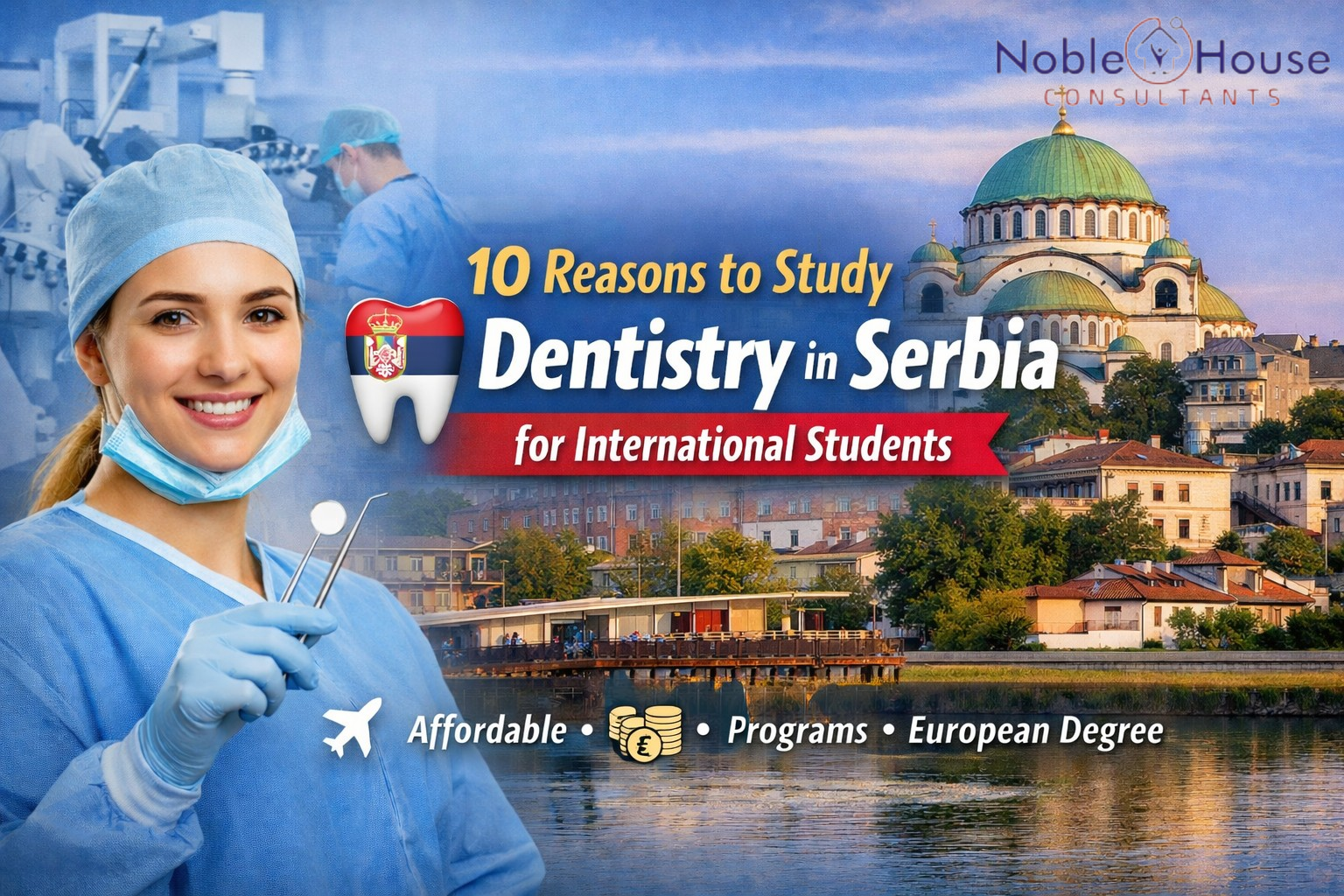
10 Reasons to Study Dentistry in Serbia for International Students
Pursuing a career in dentistry requires strong academic training, practical experience, and access to modern learning environments. In recent years, Serbia has become an increasingly attractive destination for international students who want to obtain a quality dental education in Europe. With affordable tuition fees, English-taught programs, and globally recognized degrees, the country offers a balanced combination of academic excellence and cultural experience. For many aspiring dental professionals, the opportunity to study dentistry in Serbia provides a pathway to high-quality education without the extremely high costs often associated with Western European institutions.
Below are ten key reasons why Serbia is becoming a preferred destination for dental studies among international students.
1. Affordable Tuition Fees
One of the main reasons students choose Serbia for dental education is the relatively low tuition cost. Compared to countries in Western Europe or North America, studying dentistry in Serbia is considerably more affordable. Annual tuition fees for dentistry programs generally range between €4,200 and €7,000, making it possible for students from different economic backgrounds to access quality education. This cost-effectiveness enables students to concentrate on their studies without being weighed down by significant financial pressure.
2. Dentistry Programs Taught in English
Language can often be a barrier for international students studying abroad. However, many universities in Serbia offer full dentistry programs in English, making the transition easier for students from different parts of the world. These programs are designed specifically for international applicants and follow structured curricula that meet global educational standards. As a result, students can comfortably pursue their academic journey while also gradually experiencing the local culture and language.
3. Internationally Recognized Degrees
Another major advantage is that dental degrees obtained from Serbian universities are recognized internationally. Graduates often have the opportunity to pursue careers or further studies in many countries around the world. The academic standards followed by Serbian universities align with European education frameworks, ensuring that the knowledge and qualifications gained are respected globally.
4. Affordable Cost of Living
Apart from tuition fees, the cost of living is another important factor when choosing a study destination. Serbia offers a relatively low cost of living compared to many European countries. Accommodation, food, transportation, and everyday expenses are generally affordable for students. This financial advantage makes it easier for international students to manage their budgets while enjoying a comfortable student lifestyle.
5. Modern Facilities and Dental Technology
Dental education requires access to advanced equipment and well-equipped laboratories. Universities in Serbia invest in modern infrastructure and updated dental technologies to ensure that students receive practical and relevant training. Students are exposed to modern dental clinics, simulation labs, and research facilities that support both theoretical learning and hands-on practice. This practical exposure is one of the reasons why many students choose to study dentistry in Serbia as part of their professional journey.
6. Early Clinical Training Opportunities
Practical experience plays a vital role in dental education. Serbian dental schools often introduce clinical training early in the academic program. This approach helps students develop essential clinical skills and gain confidence in treating patients under supervision. By interacting with real cases during their studies, students learn how to apply theoretical knowledge in real-life dental practice.
7. Strong Academic Tradition in Medical Education
Serbia has a long-standing tradition of medical and healthcare education. Universities across the country have built strong reputations for their medical programs over several decades. A medical university in Serbia typically follows well-established teaching methods and research practices, ensuring that students receive a comprehensive education. This academic heritage contributes significantly to the credibility and reliability of dental degrees obtained in the country.
To learn more, read our blog here: https://noblehouseconsultants.com/2025/07/24/living-studying-medical-universities-serbia/
8. Safe and Student-Friendly Environment
Safety is an important consideration for students studying abroad. Serbia is generally known for being a safe and welcoming country for international students. Cities with major universities offer a comfortable and supportive environment where students from different cultures can adapt easily. Friendly communities, accessible public transportation, and student-oriented facilities contribute to a positive overall study experience.
9. Rich Cultural Experience and European Location
Serbia’s geographic location in Southeast Europe makes it a culturally rich and historically fascinating destination. Students living in the country can experience a unique blend of Eastern and Western European traditions. From historical landmarks and vibrant cities to cultural festivals and cuisine, students gain exposure to diverse experiences outside the classroom. Additionally, the country’s location allows convenient travel to many other European destinations during academic breaks.
10. Curriculum Aligned with European Standards
Dental programs in Serbia are structured according to recognized European educational frameworks. This ensures that the curriculum maintains a high academic standard and remains relevant to modern dental practices. Students receive both theoretical knowledge and practical training that prepare them for professional opportunities in dentistry. Because of these structured programs and recognized qualifications, many international students prefer to study dentistry in Serbia as a reliable step toward building a global dental career.
Guidance and Support from Noble House Consultants
Noble House Consultants provides dedicated guidance for students who wish to pursue professional courses abroad, including dentistry. With years of experience in international education support, we help students choose suitable universities, prepare applications, and navigate the admission process smoothly. Our team offers personalized counseling, cost-effective assistance, and support with documentation and interview preparation. Based in Dubai, we also remain available to guide students throughout their journey, ensuring they feel confident and supported while taking the next step toward their academic goals.
Conclusion
Choosing the right country for dental studies is an important decision that can shape a student’s professional future. Serbia stands out as a destination that combines affordability, quality education, and international recognition. With English-taught programs, modern training facilities, early clinical exposure, and a welcoming environment, it offers a balanced and rewarding academic experience for international students.
For aspiring dentists who want a high-quality European education without extremely high costs, the opportunity to study Dentistry in Serbia can be an excellent option. Serbia stands out as an attractive destination for students pursuing a career in dentistry, thanks to its robust academic traditions, hands-on training opportunities, and rich cultural experiences.
Frequently Asked Questions
1. Is dentistry education in Serbia affordable for international students?
Yes, tuition fees for dentistry programs in Serbia generally range from €4,200 to €7,000 per year, making it more affordable than Western Europe or the US.
2. Are there dentistry programs taught in English in Serbia?
Yes, many universities offer full dentistry programs in English specifically designed for international students.
3. Are degrees from Serbian dental schools recognized internationally?
Absolutely. Dental degrees from Serbia are internationally recognized and follow European education standards.
4. When do students start clinical training in Serbia?
Serbian dental programs often provide early clinical exposure, allowing students to gain hands-on experience from the initial years.
5. What is the cost of living for students in Serbia?
The cost of living is affordable, with reasonable expenses for accommodation, food, transportation, and daily needs.
6. How can international students get support for studying dentistry in Serbia?
Consultancies like Noble House Consultants offer guidance on university selection, application processes, documentation, and ongoing support while studying abroad.
About Author

Post a Comment