- M-floor, Al Makhawi Building. Umm Hurair Road, Oud Metha, Dubai – UAE
- advisor@noblehouseconsultants.com
- +971508759073 +971508758925


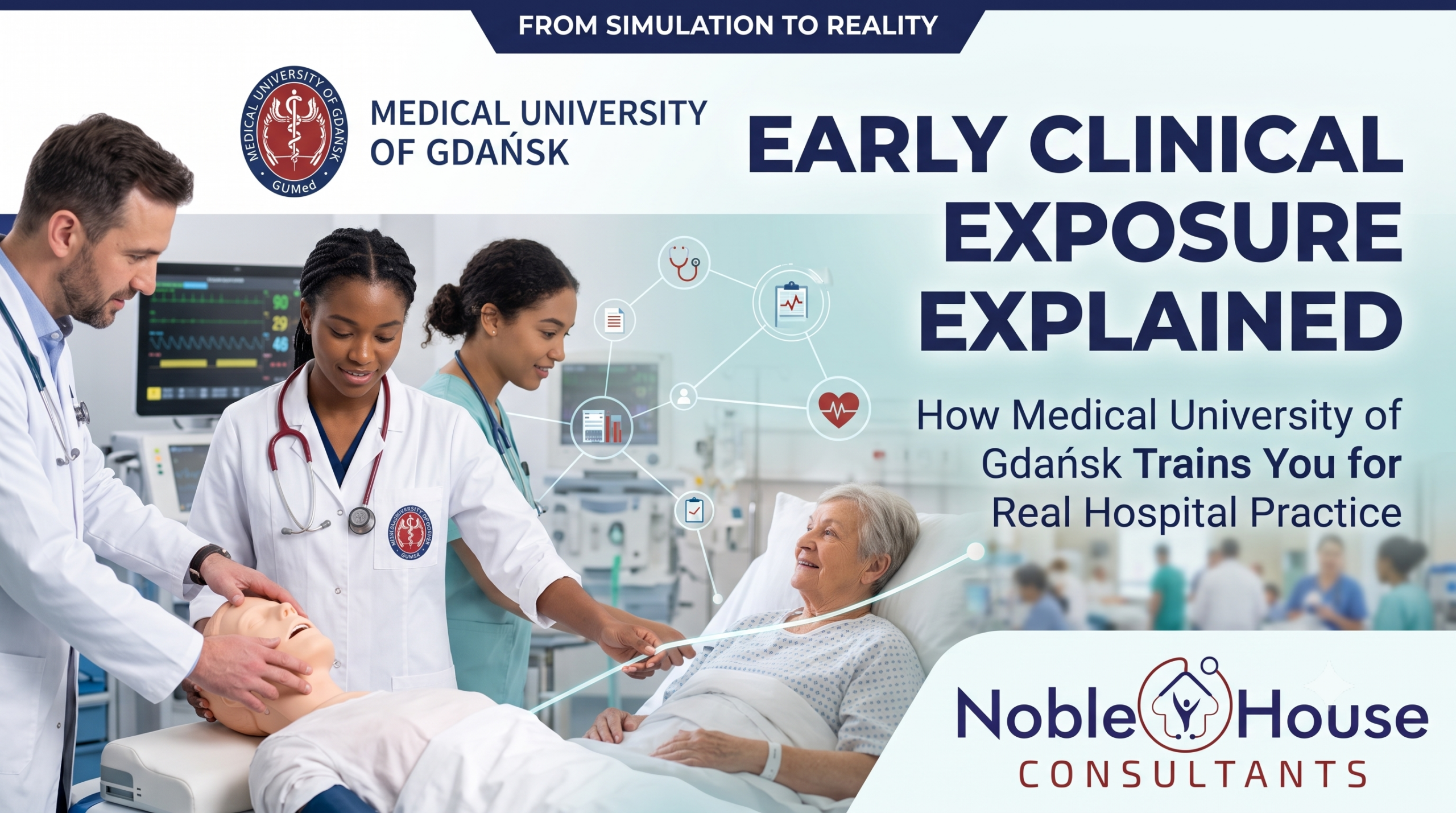
How Medical University of Gdańsk Trains You for Real Hospital Practice: Early Clinical Exposure Explained
Medical training today is no longer limited to textbooks and lecture halls. Modern medical education emphasizes early patient interaction, clinical simulation, and gradual immersion into real hospital environments. The Medical University of Gdańsk follows this progressive model closely, ensuring students are prepared for real-world healthcare demands from the very beginning of their studies. A key feature of this approach is Medical University of Gdańsk clinical training, which integrates theory with hands-on experience in a structured and progressive manner.
Early Integration of Clinical Learning
One of the strongest aspects of the university’s curriculum is Early Clinical Exposure (ECE), where students begin interacting with clinical environments in the early years of study. Instead of waiting until the final phase of medical school, students gradually build familiarity with patients, hospital workflows, and diagnostic thinking.
This phase is designed to reduce the gap between academic knowledge and practical application. Students observe real patient cases, learn communication skills, and understand how healthcare teams function in a hospital setting. This early integration builds confidence and prepares them for more complex responsibilities later in their education.
This system is a core part of Medical University of Gdańsk clinical training, ensuring that students develop not only theoretical knowledge but also essential bedside skills from the beginning.
Simulation-Based Skill Development
Before entering real wards, students are trained in highly advanced simulation environments. These labs use realistic manikins and clinical setups to replicate hospital scenarios as closely as possible. Here, students practice essential procedures such as injections, catheterization, airway management, and basic emergency interventions.
The simulation-based approach allows learners to make mistakes in a safe environment and refine their techniques without risk to patients. It also helps them build muscle memory and clinical confidence before transitioning to real-life situations.
Another important aspect of Medical University of Gdańsk clinical training is that simulation is not limited to technical skills alone. Students also practice patient communication, physical examinations, and clinical decision-making in structured assessment environments that mimic real hospital pressure.
Research Exposure and Clinical Understanding
Students are also introduced early to clinical research environments where they observe ongoing studies in areas such as oncology, cardiology, and neurology. This exposure helps them understand how medical knowledge evolves and how treatments are developed and tested.
Through this experience, students learn to connect classroom theory with real-world medical practice. They also gain insight into how patient outcomes are improved through research-driven innovation.
The structured approach of Medical University of Gdańsk clinical training ensures that students not only learn how to treat patients but also understand the scientific foundation behind modern medicine.
Hospital-Based Learning and Specialised Rotations
As students progress, they move into full clinical rotations in large, highly specialized teaching hospitals. This stage of training exposes them to a wide variety of medical disciplines and complex patient cases.
Students work under supervision in departments dealing with surgery, internal medicine, emergency care, and advanced treatment procedures. They encounter real-world cases such as organ transplantation, minimally invasive procedures, and advanced therapeutic interventions.
The scale and diversity of hospital exposure play a crucial role in shaping clinical competence. Through this phase of Medical University of Gdańsk clinical training, students begin functioning as junior members of healthcare teams, gradually taking on more responsibility.
Development of Communication and Bedside Skills
A major component of early clinical education is learning how to interact with patients effectively. Students are trained to take medical histories, conduct physical examinations, and communicate with patients in a professional and empathetic manner.
These skills are developed gradually through supervised practice, ensuring students understand not only the technical aspects of medicine but also the human side of healthcare. Building trust with patients and maintaining professionalism are emphasized throughout the training process.
This human-centered approach is a defining feature of Medical University of Gdańsk clinical training, ensuring graduates are well-rounded doctors capable of both scientific reasoning and compassionate care.
Structured Progression from Theory to Practice
The transition from classroom learning to hospital practice is carefully structured. Students first master foundational sciences, then move into simulated environments, and finally progress to real patient care under supervision.
This step-by-step approach ensures that students are never overwhelmed and always supported as they develop new skills. It also allows for continuous assessment and improvement throughout the learning journey.
Such a structured pathway is central to Medical University of Gdańsk clinical training, ensuring that every graduate is fully prepared for independent medical practice.
Early Clinical Exposure in a Global Context
Early Clinical Exposure has become an important trend in modern medical education worldwide. It ensures that students are not only academically strong but also clinically confident from an early stage.
Early clinical exposure in medical school Poland reflects this global shift by integrating patient contact and simulation training much earlier than traditional systems. This approach helps students develop real-world readiness while still in the early phases of their education.
Learning in a Hospital-Centered Academic Environment
The university’s teaching model is deeply connected with hospital-based learning, ensuring that students are continuously exposed to real healthcare systems throughout their education.
Hospital-based medical education Gdańsk focuses on blending academic learning with clinical exposure, allowing students to understand how hospitals operate on a day-to-day basis while still in training.
This integration helps students adapt quickly to professional environments and prepares them for seamless transition into residency and professional practice.
Clinical Internships and Practical Training Pathways
As students advance in their medical education, they participate in structured internships and hands-on clinical placements. These internships provide extended exposure to patient care and medical decision-making under supervision.
Medical internships in Polish universities are designed to bridge the final gap between student learning and professional practice, ensuring graduates are confident and competent in real hospital settings.
Through these experiences, students refine their diagnostic abilities, improve procedural skills, and develop the confidence needed for independent medical roles.
Turn Your Study Abroad Dreams into Reality with Trusted Guidance
Noble House Consultants is a UAE-based education support service helping students pursue careers in medicine, engineering, business, and more across destinations like Poland, the UK, Turkey, Georgia, and Serbia. With a focus on affordable and personalized support, they assist students through admissions, documentation, visa processing, and interview preparation. Their experienced team also offers direct guidance and onsite support, ensuring students feel confident at every step. From course selection to final enrollment, they make global education more accessible and stress-free.
Conclusion
The Medical University of Gdańsk offers a comprehensive and structured approach to medical education that emphasizes early exposure, simulation-based training, and progressive clinical responsibility. By integrating academic learning with real-world hospital experience, students develop both technical competence and professional maturity.
Ultimately, Medical University of Gdańsk clinical training ensures that graduates are not only knowledgeable but also fully prepared to meet the demands of modern healthcare environments with confidence and skill.
Frequently Asked Questions
1. What is Early Clinical Exposure at MUG?
It is a system where students interact with patients early and gradually build clinical skills alongside theory.
2. How does simulation training help students?
It allows safe practice of medical procedures like injections and intubation before working with real patients.
3. When do students start hospital training?
Students begin exposure early and later progress into full clinical rotations in teaching hospitals.
4. What skills do students develop during training?
They develop clinical reasoning, patient communication, examination skills, and hands-on procedural abilities.
5. Do students work with real patients?
Yes, under supervision, students gradually take histories and perform examinations in clinical settings.
6. Why is this training model effective?
It combines theory, simulation, and real hospital exposure, making students fully prepared for medical practice.
About Author

One Reply to “How Medical University of Gdańsk Trains You for Real Hospital Practice: Early Clinical Exposure Explained”
Medical University of Gdansk Recognition Explained: What Do WFME, NCFMEA, MCI and International Accreditations Actually Mean? - Noble House Consultants
28 Aug 2026[…] Medical University of Gdansk is included in the World Directory of Medical Schools. Being listed in such an international […]